Why Guava Trees Are One of the Easiest Fruit Trees to Grow at Home
Guava trees rank among the simplest fruit trees a homeowner in Central Florida can plant and enjoy. They handle high heat, sandy soil, and long stretches without rain better than most fruit trees sold in the region. A young guava tree can start setting fruit within two to four years, and a healthy specimen keeps producing harvests for decades. Gardeners who have never grown fruit before often pick guava first because the tree forgives common beginner mistakes. It adapts to the soil it lands in, recovers quickly from summer storms, and grows fast in the warm Florida climate. Summer is a strong season to get a guava tree established, since warm soil and frequent afternoon rain help young roots settle into place. Most varieties produce fruit without a second tree nearby, which keeps things simple for small yards. This guide explains exactly why guava sits near the top of the easy fruit tree list, and it walks through the basic care that keeps one thriving at home.
What Makes Guava Trees One of the Easiest Fruit Trees to Grow at Home
Several traits push guava trees to the front of the line when homeowners search for easy fruit trees to grow at home. The tree tolerates the poor, sandy ground that covers much of Central Florida, so you rarely need to haul in truckloads of special soil. It also handles drought once the roots take hold, which means a missed watering will not ruin your harvest. Guava grows quickly compared to citrus and many stone fruits, giving you fruit sooner and a fuller canopy within a couple of seasons. Pests do appear in Florida, but the tree itself stays vigorous and bounces back from most setbacks. Pruning is forgiving, and you can shape a guava into a compact tree or a low hedge to fit your space. These qualities together make guava a smart pick for a first fruit tree, and the sections below break down the main reasons in detail.
Guava Trees Are One of the Easiest Fruit Trees to Grow in Florida Soil
The sandy, fast draining soil found across Groveland, Clermont, and the surrounding towns frustrates many fruit trees, yet guava treats it like home. Guava roots do not rot easily in loose ground, and the tree pulls nutrients from soil that would starve a fussier species. You do not need a perfect garden bed to get started, which removes one of the biggest hurdles new growers face. A simple planting hole, some compost mixed into the backfill, and a layer of mulch on top give a young guava everything it needs to begin. The tree even tolerates the higher pH found in Florida limestone areas, where iron and other nutrients can lock up. Because guava adjusts to so many soil conditions, you spend far less time amending and testing the ground. That flexibility is a major reason guava ranks as one of the easiest fruit trees to grow in this part of the state.
Soil that drains well still helps a guava reach its full potential, so picking a spot that does not stay soggy after a storm pays off. Standing water around the trunk for days at a time is the one condition guava dislikes, and Central Florida summers bring plenty of heavy rain. Raised beds or a slightly mounded planting site solve this easily and keep the root zone healthy through the wet season. Adding two to three inches of mulch around the base, kept a few inches off the trunk, locks in moisture and feeds the soil as it breaks down. Mulch also keeps weeds down and protects the shallow surface roots from the hot summer sun. These small steps cost little and take only an afternoon, yet they set the tree up for years of strong growth. None of this requires special equipment or expert skill, which keeps guava firmly in the beginner friendly category.
Established guava trees actually improve the soil around them over time as fallen leaves and old mulch enrich the top layer. This means the longer your tree grows, the easier the ground becomes to manage. You can plant a guava in a spot where other fruit trees have struggled and often watch it succeed where they failed. Browse the full selection of guava varieties and find the right fit for your yard on our guava trees page. The team can point you toward the types that perform best in local soil conditions. Many homeowners are surprised at how little ground preparation guava truly needs. That simplicity is what brings first time growers back to plant a second and third tree.

Guava Trees Are One of the Easiest Fruit Trees to Grow With Little Water
Once a guava tree settles in, it tolerates dry spells that would stress citrus, peaches, and many other backyard fruit trees. The tree develops a sturdy root system that reaches for moisture deep in the soil, so it keeps going through the hot, dry stretches between summer rains. For the first few months after planting, a young guava needs steady watering to help those roots spread, usually a few deep soakings each week. After that first season, you can scale back sharply and let natural rainfall handle most of the work. This drought tolerance is a huge relief for busy homeowners and for anyone who travels often during the summer. A missed week of watering will not kill an established guava, even in the middle of a Florida heat wave. That margin for error is exactly what makes the tree so forgiving for new growers.
Watering still matters most during the months when the tree is flowering and forming fruit, since dry conditions then can shrink the harvest. Deep, infrequent watering beats light daily sprinkles, because it trains the roots to grow downward instead of clustering at the surface. A long, slow soak that wets the soil a foot or more deep, repeated only when the top few inches dry out, keeps a guava productive. During Central Florida summers, the regular afternoon storms often cover this need on their own. A simple finger test in the soil tells you when to water and when to wait, so you never have to guess. This relaxed schedule fits easily into a normal weekly routine and removes the daily pressure that scares off many would be fruit growers. Guava rewards a light touch far more than it rewards fussing.
Container grown guava trees do dry out faster and need more frequent attention, which is worth keeping in mind for patio plantings. A potted tree may need water every day or two in peak summer heat, since the limited soil holds less moisture. Even so, the same rules apply: soak the pot thoroughly, then let the surface dry before watering again. Mulch on top of the potting mix slows evaporation and stretches the time between waterings. Most homeowners who plant guava directly in the ground find it almost carefree once the first season passes. If you want a tree that survives your busy weeks and still produces, guava is one of the most reliable choices on the market. You can compare it with the rest of our stock on the trees for sale page.
Guava Trees Are One of the Easiest Fruit Trees to Grow in Full Florida Sun
Guava loves the strong, direct sunlight that Central Florida delivers for most of the year. A spot with six or more hours of full sun each day produces the sweetest fruit and the heaviest crops. Many fruit trees scorch or stress under intense summer sun, but guava treats that heat as ideal growing weather. This trait makes the tree perfect for open backyards, fence lines, and sunny corners where other plants would suffer. You do not need to fuss over shade cloth or careful placement, since guava simply thrives in the brightest spots you have. The more sun the tree gets, the faster it grows and the more flowers it sets. That direct relationship between sun and fruit makes planting decisions refreshingly simple.
Picking the right location at planting time saves you trouble later, because guava grows quickly and fills out fast. Choose a spot away from large shade trees and tall structures that could block the afternoon light as the tree matures. Give the tree enough room to spread, since a healthy guava can reach ten to fifteen feet wide if left unpruned. Planting near a south or west facing fence often gives the tree the long sun exposure it craves. Avoid low, shaded pockets of the yard where cool air settles and sunlight falls short. A sunny, open site combined with loose soil and good drainage covers nearly every requirement a guava has. Get these basics right and the tree practically takes care of the rest.
Full sun also keeps the canopy dry and airy, which lowers the chance of fungal problems during the humid summer months. Good airflow and bright light discourage the mildew and leaf spots that plague shaded fruit trees. A guava planted in the open simply stays healthier with less effort from you. This is another reason the tree earns its reputation as one of the easiest fruit trees to grow at home in Florida. Sun loving, heat tolerant, and quick to establish, guava fits the local climate almost perfectly. New growers who plant in a bright spot rarely run into the frustrations that come with shade loving species. The right location does most of the heavy lifting for you.
How to Care for Guava Trees You Grow at Home
Caring for guava trees you grow at home stays simple once the tree is in the ground and rooted. The main tasks are light pruning, occasional feeding, and basic protection from a few common pests and the rare hard freeze. None of these jobs demand special tools or advanced gardening skill, which keeps guava friendly for first time fruit growers. A guava that gets full sun, drains well, and receives a few feedings during the growing season will reward you generously. Most of the year, the tree asks very little beyond a glance and the occasional cleanup. Summer is the active growing season in Central Florida, so it is the best window to shape the tree and start a feeding routine. The sections below cover the three care tasks that matter most for a long, productive tree.
Pruning Guava Trees You Grow at Home
Pruning a guava tree controls its size, improves airflow, and encourages heavier fruiting on new growth. Guava produces fruit on the current season’s branches, so a yearly trim actually pushes the tree to set more fruit rather than less. You can keep a guava as small as a six foot shrub or let it grow into a fifteen foot tree, depending on how you cut it. For most home yards, a compact shape makes harvesting easy and keeps the fruit within reach. The best time to prune in Central Florida is after the main harvest or during the warm growing months when the tree heals fast. Use clean, sharp tools and remove dead, crossing, or inward growing branches first. This simple cleanup opens the canopy to light and air, which keeps the tree healthy through the humid season.
Beginners sometimes worry about cutting too much, but guava handles heavy pruning remarkably well and resprouts with vigor. You can cut a leggy or overgrown tree back hard and watch it return fuller and more productive within a season. Tip pruning the branch ends encourages bushier growth and more of the fresh wood that carries fruit. Removing low branches near the ground keeps fruit clean and makes mowing and mulching easier underneath. Aim to thin the interior so sunlight reaches deep into the canopy rather than only hitting the outer leaves. A balanced shape also helps the tree support its fruit load without branches snapping in summer storms. Over time, regular light pruning is far easier than letting a tree grow wild and trying to tame it later.
Pruning also gives you a chance to inspect the tree closely and catch any problems early. While you trim, look over the leaves and branches for signs of pests, disease, or storm damage. Catching trouble at this stage keeps small issues from becoming large ones. Bagging or removing fallen fruit during these sessions cuts down on pests that breed in rotting guava. Keep your cuts clean and avoid leaving stubs, which can invite decay. With a yearly habit, pruning becomes a quick and satisfying chore rather than a daunting project. A well shaped guava is easier to harvest, easier to protect, and far more productive over the years.
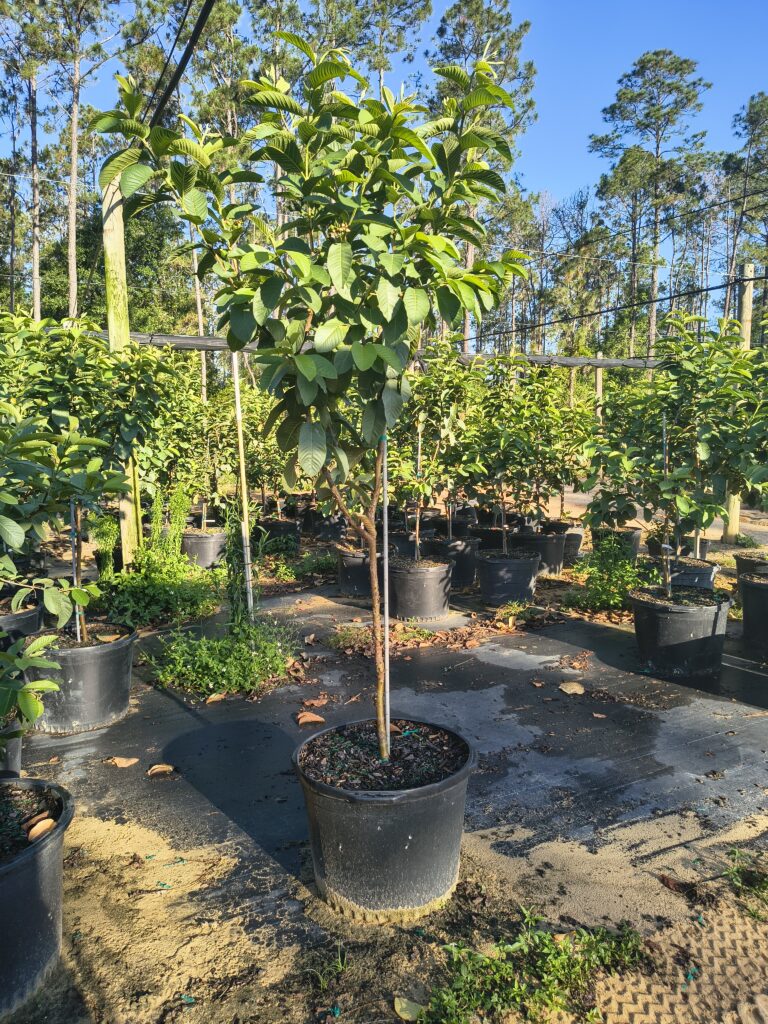
Feeding Guava Trees You Grow at Home
Guava trees grow fast, and that quick growth burns through nutrients, so a regular feeding routine keeps the tree strong and productive. A balanced fruit tree fertilizer applied several times during the warm growing season covers most of the tree’s needs. Young trees benefit from lighter, more frequent feedings spread out every couple of months from spring through early fall. Mature trees can take larger feedings spaced further apart, timed around their growth and fruiting cycles. Always water the soil after feeding so the nutrients move down to the roots instead of sitting on the surface. Spread the fertilizer evenly out to the edge of the canopy rather than piling it against the trunk. This steady supply of nutrients supports both heavy growth and a generous fruit set.
Florida’s sandy soil drains nutrients quickly, which is why guava appreciates smaller, more frequent feedings over one large dose. The tree also responds well to minor nutrients like iron, zinc, and manganese, which can run short in the high pH soils of the region. Yellowing leaves with green veins often signal a minor nutrient shortage that a quality fruit tree fertilizer corrects. Compost and aged manure worked into the mulch layer add slow release nutrition and improve the soil at the same time. Stop heavy feeding as the cooler months approach, since a flush of tender new growth can be damaged by an unexpected cold snap. A simple seasonal schedule, paired with good mulch, keeps a guava well fed without much fuss. The tree rarely asks for more attention than this.
Overfeeding causes its own problems, so resist the urge to dump on extra fertilizer hoping for faster results. Too much nitrogen pushes leafy growth at the expense of flowers and fruit, leaving you with a large, leafy tree and a thin harvest. Following the rates on the fertilizer label protects both the tree and your wallet. Watching how the tree responds tells you more than any rigid formula, since a vigorous, dark green guava with steady fruit needs little adjustment. Mulch breaking down on top of the soil supplies a quiet, steady stream of nutrition between feedings. Balanced and consistent care always beats a feast or famine approach. With this routine, your guava stays healthy and keeps fruiting season after season.
Protecting Guava Trees You Grow at Home From Pests and Cold
Guava stays vigorous, but a few Florida pests do show interest, and the Caribbean fruit fly tops the list. This pest lays eggs in ripening fruit, so picking guava slightly early and removing fallen fruit promptly cuts off its breeding cycle. Bagging individual fruit or harvesting at the firm stage protects your crop without heavy spraying. Scale, whiteflies, and the occasional caterpillar may appear, yet a healthy tree usually shrugs them off with minor help. A strong spray of water or an approved horticultural oil handles most minor infestations. Keeping the area beneath the tree clean of dropped fruit and leaves removes the shelter many pests rely on. Routine inspection during pruning catches these visitors before they get a foothold.
Cold is the one weather event that demands real attention in Central Florida, since guava is sensitive to hard freezes. Young trees are the most vulnerable, and a deep freeze can damage tender branches and leaves. When a hard frost is forecast, cover a small tree with a frost cloth or blanket and add a layer of mulch over the root zone for insulation. Watering the soil before a cold night also helps, since moist ground holds heat better than dry ground. Mature guava trees often survive brief freezes and resprout from the trunk even after losing their leaves. Planting in a spot protected from cold north winds, such as near a south facing wall, gives the tree an extra edge. A few simple precautions carry a young guava safely through the rare Central Florida cold snap.
Beyond pests and cold, guava rarely faces serious threats in this climate, which keeps its overall care load light. Good drainage and full sun prevent most fungal issues before they start, so prevention does most of the work. A healthy, well fed tree resists trouble far better than a stressed one, making the basic care above your strongest defense. Cleaning up fallen fruit, inspecting during pruning, and shielding the tree from hard freezes cover nearly every risk. None of these tasks take much time or skill, which is the whole reason guava earns its easy reputation. Want to see which fruit trees grow well alongside guava in your area? Explore our full lineup on the trees for sale page. A little prevention keeps your tree producing for many years.
Why You Should Plant a Guava Tree at Your Home This Summer
Summer is one of the best times of year to plant a guava tree in Central Florida, and the reasons are simple. The warm soil and steady rain help young roots establish quickly, giving the tree a strong head start before its first winter. Guava grows fast through the hot season, so a tree planted now can fill out impressively by fall. With its tolerance for heat, sandy soil, and dry spells, guava fits the local climate better than almost any other backyard fruit tree. Planting now also means fruit could arrive sooner, sometimes within just a couple of growing seasons. A guava tree is a low effort way to add fresh fruit, shade, and value to your property. The team at Paul’s Nursery can help you choose the right variety and get it planted correctly.
The Right Time to Plant a Guava Tree at Your Home
Timing your guava planting for the warm season sets the tree up for the fastest, healthiest start. The hot, rainy Central Florida summer creates ideal conditions for roots to spread and anchor before cooler weather arrives. A tree planted in summer has months of active growth ahead before its first real test from cold. This long runway helps the tree build the strong root system that carries it through future dry spells and storms. Planting during the growing season also means the tree responds quickly to feeding and watering, rewarding your care fast. Getting a guava in the ground now is a smart move for any homeowner who wants fruit sooner.
The planting process itself stays simple and beginner friendly, which matches guava’s easygoing nature. Dig a hole roughly twice as wide as the root ball, set the tree at the same depth it grew in the pot, and backfill with a mix of native soil and compost. Water the tree deeply right after planting to settle the soil and remove air pockets around the roots. Add a thick ring of mulch around the base, kept a few inches off the trunk, to hold moisture and feed the soil. Keep the young tree watered steadily through its first season while the roots establish. These few steps are all it takes to launch a guava on the path to years of fruit.
Choosing a sunny, open spot with room to grow rounds out the planting plan. Picture the tree at full size and leave space so it gets full sun and good airflow as it matures. Avoid low areas where water pools or cold air settles on chilly nights. A thoughtful location at planting time spares you headaches down the road and lets the tree perform at its best. With the right spot and a simple planting routine, your guava starts strong from day one. Summer truly is the season to get this easy fruit tree established.

Where to Buy a Guava Tree for Your Home in Central Florida
Buying a healthy, well started guava tree from a trusted local nursery makes all the difference in your results. A tree grown in Central Florida conditions arrives already adapted to the local soil, sun, and climate. Starting with a strong, disease free tree saves you months of frustration compared to a weak plant from a big box store. At Paul’s Nursery in Groveland, the guava trees are raised with the same care and standards the family has held for generations. The staff can guide you to the variety that matches your space, your taste, and your goals. Picking the right tree from the start is the simplest way to guarantee a good outcome.
Local expertise also means honest advice about which guava varieties truly thrive in your area. Some types produce sweet pink fleshed fruit, while others lean tart or stay more compact for small yards. A knowledgeable nursery helps you match the tree to your conditions instead of guessing from an online listing. You can ask about pollination, mature size, and the flavor you can expect at harvest. This kind of guidance is hard to find at a general garden center staffed by seasonal help. Shopping locally connects you with people who actually grow these trees and know how they perform.
Buying close to home also makes delivery and planting far easier to arrange. Paul’s Nursery offers free estimates for delivery and planting, so a large tree can arrive and go in the ground without the hassle of transporting it yourself. This service takes the strain out of starting a backyard orchard, especially for heavier trees. You get a healthy tree, expert placement, and a strong start all in one step. Browse the available varieties anytime on our guava trees page to see what is in stock. Local, knowledgeable, and convenient service is the easy path to fresh guava at home.
Why Choose Paul’s Nursery for Your Guava Tree
Paul’s Nursery brings more than 125 years of family nursery tradition to every tree it sells. That long history means deep, practical knowledge of which fruit trees thrive in Central Florida and how to keep them healthy. The family takes its ethos seriously, focusing on honest recommendations rather than pushing a sale. You get advice you can trust and a tree chosen to succeed in your specific yard. This commitment to doing right by customers has helped countless local homeowners build thriving backyard orchards. When you buy from Paul’s Nursery, you gain a partner in your growing success, not just a transaction.
The nursery serves Clermont, Winter Garden, The Villages, Groveland, and many nearby communities with a wide selection of healthy fruit trees. Alongside guava, you will find citrus, mango, avocado, and a long list of other tropical and subtropical varieties suited to the area. Free estimates for delivery and planting make it simple to get your new tree home and in the ground. The staff is happy to answer questions about care, spacing, and the best varieties for your taste. This hands on guidance turns a first time fruit grower into a confident one. Few nurseries match this blend of selection, service, and genuine local knowledge.
Ready to plant one of the easiest fruit trees you can grow at home? Visit Paul’s Nursery at 13844 Equestrian Dr in Groveland, browse the selection on our guava trees page, and let the team help you pick the perfect tree for your yard. Summer is the ideal season to get a guava established, and the staff can walk you through every step from selection to planting. With free delivery and planting estimates available, starting your backyard orchard has never been simpler. Call Paul’s Nursery today at (352) 536-4893 to find your guava tree and start enjoying fresh, homegrown fruit for years to come.