When and How to Fertilize Your Fruit Trees for Healthy Growth
Fruit trees in Central Florida grow in sandy soil that drains fast and holds very few nutrients. That kind of ground pushes water and food past the roots before the tree can use them, so regular feeding becomes the key to strong production. Knowing when and how to fertilize your fruit trees for healthy growth protects both your investment and your future harvest. The right schedule supports deep roots, green leaves, and heavy fruit set through every season of the year. Timing matters just as much as the product you spread on the ground beneath the canopy. A tree fed at the wrong moment can waste expensive nutrients or push out tender new growth that a cold snap will damage. This guide walks you through the seasons, the warning signs, and the exact steps that lead to healthy, productive trees. By the end, you will know what your trees need and the times of year they need it most.
When to Fertilize Your Fruit Trees for Healthy Growth in Central Florida
Timing your fertilizer program is the first step toward reliable, healthy growth. Central Florida sits in a warm zone where citrus, mango, and avocado trees stay active for much of the year. That long growing window changes how you feed your trees compared to gardeners in colder states. Deciduous trees like peach and plum follow a different rhythm and take a real rest through the winter months. Each type of tree responds best to feeding at specific points in its yearly cycle. Reading the calendar and the tree together gives you the strongest results season after season. The sections below break down the right season, the correct frequency, and the warning signs you should watch for closely.
The Best Season to Fertilize Your Fruit Trees for Healthy Growth
The best season to fertilize your fruit trees for healthy growth begins as new growth appears in late winter and spring. Citrus trees in Central Florida usually take their first feeding in February or March once the weather starts to warm. A second round follows in late spring, and a third comes along in early fall as the crop develops. Summer feeding fits well in this region because trees stay active and keep pulling nutrients through the warm months. Sandy soil loses food quickly during the summer rainy season, so a light summer application keeps trees well supplied. You should avoid heavy feeding in late fall and winter, since fresh growth can freeze during a sudden cold snap. Matching your fertilizer to the active growing season keeps the tree working with you instead of against you.
Deciduous fruit trees follow a schedule tied closely to their dormant and active phases. Peach, plum, nectarine, and pear trees drop their leaves and rest quietly through the winter. You feed these trees as the buds begin to swell in late winter or early spring, right before the flush of new leaves. A second, lighter feeding can follow after fruit set to support the developing crop on the branches. Stop feeding these trees by midsummer so the wood can harden off well before cold weather arrives. Late feeding pushes soft new growth that simply will not survive a freeze. Working with each tree’s natural clock protects both the wood and the coming harvest.
Tropical trees such as mango and avocado prefer steady feeding during the warm growing season. These trees flower and set fruit in spring, then carry that fruit through the full heat of summer. Small, frequent feedings from spring through early fall support that long ripening process. Because Central Florida summers bring heavy rain, nutrients wash away quickly and need replacing more often. A slow release product spreads the feeding out over weeks and cuts down on waste. Watch the forecast and hold off if a rare cold event is coming, since young tropical trees stay tender. Steady seasonal feeding builds the strong canopy these trees need to ripen a full and flavorful crop. Ready to plant a new tree this season? Browse our full selection of fruit trees for sale and pick your favorites today.
How Often to Fertilize Your Fruit Trees for Healthy Growth
How often to fertilize your fruit trees for healthy growth depends on the age and the type of tree. Young trees planted within the last year need small amounts spread across several feedings. Frequent light doses prevent root burn and match the slow early demand of a young tree. A common plan for young citrus uses a small amount every six to eight weeks during the growing season. Older, established trees can handle larger amounts given three or four times each year. Splitting the total into rounds keeps a steady supply available in the fast draining sandy soil. This rhythm feeds the tree well without overwhelming the roots at any single point.
The size of the tree guides the amount you apply at each individual feeding. A general rule for citrus uses a set amount of fertilizer per year for each year of the tree’s age, up to a maximum. You then divide that yearly total across the scheduled feedings across the season. Measuring the amount keeps you from guessing and protects the roots from excess salt. Too much fertilizer at once can scorch the leaves and put real stress on the tree. Too little food leaves the tree pale, thin, and slow to produce fruit. A simple scale or measuring cup turns feeding into a precise task instead of a risky gamble.
Rain and soil type also change how often you feed here in Central Florida. Sandy ground drains fast, so nutrients move below the root zone much quicker than they would in clay soil. During the summer rainy season, more frequent light feedings replace what the heavy rain carries away. A slow release fertilizer eases this problem by releasing food over weeks instead of days. Keep a simple calendar and mark each feeding date so you always stay on track. Skipping rounds during the wet months often leaves trees hungry and weak by fall. Consistency across the whole year produces steadier growth than a few large, widely spaced applications.
Signs Your Fruit Trees Need Fertilizer for Healthy Growth
Signs your fruit trees need fertilizer for healthy growth usually show up first in the leaves. Yellowing leaves, a condition called chlorosis, often point to a shortage of nitrogen or other nutrients. A nitrogen shortage tends to turn the older, lower leaves pale while the tree slows its growth. Pale new leaves with green veins can signal a lack of iron or manganese, which happens often in sandy Florida soil. Small, thin leaves and short new shoots suggest the tree simply is not getting enough food. Watching leaf color through the season helps you catch these problems before they hurt the harvest. A quick look each week can tell you a great deal about your tree’s overall health.
Weak fruit set and small fruit are two more clear signs your trees need feeding. A tree short on nutrients may drop its flowers or young fruit long before they mature. The fruit that does remain can stay small, thin skinned, or low in flavor. Poor color and slow ripening also hint at a real nutrient gap in the soil. A magnesium shortage often shows up as yellow patches near the base of the older leaves. A zinc shortage can cause small leaves that cluster tightly at the branch tips. Reading these clues lets you correct the tree’s diet before the entire crop suffers.
A soil test gives you the clearest possible picture of what your trees actually need. The test measures pH along with the levels of the key nutrients present in your ground. Most fruit trees prefer a slightly acidic soil near a pH of six to six and a half. When the pH drifts too high, the roots cannot absorb iron and other elements even when they are present. Adjusting the pH and matching the fertilizer to the results removes almost all of the guesswork. Local conditions vary block by block across Central Florida, so testing your own yard truly pays off. If you feel unsure how to read the results, our team can walk you through the numbers.
How to Fertilize Your Fruit Trees for Healthy Growth the Right Way
Once you know the timing, the method makes the difference between waste and real results. Fertilizer only helps when it reaches the roots in the right form and the right amount. The way you spread it, water it in, and protect the trunk all affect the final outcome. Central Florida’s sandy soil rewards careful technique and punishes a sloppy application. The steps below cover product choice, spreading method, and the follow up care that ties it together. Follow them in order and your trees will use far more of what you give them. Good technique turns a simple bag of fertilizer into a full canopy and a heavy crop.
Choosing the Right Fertilizer for Healthy Fruit Tree Growth
Choosing the right fertilizer for healthy fruit tree growth starts with reading the label closely. The three numbers on the bag show the percent of nitrogen, phosphorus, and potassium inside. Citrus and most fruit trees do well with a balanced blend made specifically for fruit or citrus trees. These blends also include micronutrients like magnesium, manganese, zinc, iron, and boron. Sandy Florida soil often runs short on those micronutrients, so a citrus product fills that gap well. Look for a formula that clearly lists these extra elements rather than a plain lawn fertilizer. Matching the product to the tree gives the roots a complete and balanced diet.
Slow release fertilizers work very well in the sandy soil across Groveland and the nearby towns. These products coat the nutrients so they dissolve over weeks instead of washing away in a single rain. That steady release matches how a tree takes up food and cuts way down on waste. Quick release granules feed fast but leave the soil sooner, which means more frequent trips to the yard. Organic options like composted manure and rich blends feed the soil life while they feed the tree. Many growers combine a slow release granule with a light organic top dressing for balance. The right mix depends on your trees, your soil, and how much time you want to spend feeding.
Liquid and foliar feeds serve a specific purpose within a healthy tree program. A foliar spray delivers micronutrients straight to the leaves when a shortage shows up fast. This method corrects iron or manganese problems much quicker than soil feeding alone can. Foliar feeds work best as a supplement, not as a full replacement for granular fertilizer. Apply them in the cooler morning hours to avoid leaf burn in the strong Florida heat. Always follow the label rate closely, since a strong mix can damage tender foliage. Used correctly, these sprays give a fast boost while your soil program does the steady work. Looking to add citrus to your orchard? See our orange trees for sale and start your grove the right way.
The Correct Method to Fertilize Your Fruit Trees for Healthy Growth
The correct method to fertilize your fruit trees for healthy growth spreads the food where the roots feed. Most feeder roots sit in the top foot of soil and reach out to the edge of the canopy. Spread granular fertilizer evenly under the canopy out to the drip line, the outer edge of the branches. Keep the granules off the trunk, since fertilizer against the bark can burn it and invite disease. Leave a gap of several inches between the trunk and the start of the fertilizer ring. This spread pattern places the food within easy reach of the active feeder roots. Even coverage prevents hot spots that can scorch one side of the root system.
Measuring and marking the area keeps every feeding accurate and safe for the tree. Weigh or measure the fertilizer before you spread it based on the tree’s current size and age. Walk the material out in a wide band rather than dumping it all in one pile. A hand spreader or even a simple cup gives you steady control over the flow. For young trees, a smaller circle close to the trunk matches their shorter root reach. As the tree grows, widen the ring each year to follow the expanding canopy above. This simple habit keeps the food in exactly the right zone as the tree matures.
Timing the application within the day also protects your trees from stress. Feed in the morning or evening when temperatures are lower and the tree is calmer. Avoid spreading fertilizer on bone dry soil, since concentrated salts can harm dry roots. Lightly moisten the ground first if the soil has gone dry during a long hot spell. Do not fertilize right before a heavy storm, because the rain will flush the nutrients away. A calm day after a light rain often gives you the best possible conditions. Reading the weather turns a routine chore into a well timed feeding the tree can truly use.
Watering and Mulching After You Fertilize Your Fruit Trees for Healthy Growth
Watering after you fertilize your fruit trees for healthy growth moves the nutrients down to the roots. Granular fertilizer needs moisture to dissolve and travel down into the soil. Water the area well right after you spread the product, giving it a deep and thorough soak. This step also washes any stray granules off the leaves and away from the trunk. In the sandy soil here, avoid flooding the area, since too much water pushes food past the roots. A steady, deep watering strikes the right balance between dissolving the food and leaching it. Regular irrigation in the days after feeding keeps those nutrients working for the tree.
Mulch plays a quiet but powerful role in strong, healthy tree growth. A layer of mulch over the root zone holds moisture and keeps the soil cooler through summer. Cooler, moist soil helps the roots absorb the nutrients you just applied to the ground. Mulch also feeds the soil as it breaks down and adds organic matter over time. Spread two to three inches of mulch under the canopy, but keep it a few inches back from the trunk. Piling mulch against the bark traps moisture and can quickly lead to rot. Refresh the layer once or twice a year to keep all of its benefits going.
Follow up care ties the whole feeding program together into one steady routine. Check the trees a week or two after feeding to watch for greener leaves and fresh new shoots. Keep notes on the date, the product, and the tree’s response so you can adjust next time. Pull the weeds under the canopy, since they compete with the tree for the food you applied. Watch for pests too, because a well fed tree still needs protection from insects and disease. Keep the watering steady through the growing season to support all of that new growth. This ongoing attention turns a single feeding into lasting, dependable, healthy growth.
Why You Should Let Paul’s Nursery Help You Fertilize Your Fruit Trees for Healthy Growth
Feeding fruit trees takes real knowledge, careful timing, and the right stock to begin with. Paul’s Nursery has served Central Florida families for generations with honest advice and healthy trees. We help homeowners in Groveland, Clermont, Winter Garden, and The Villages build backyard orchards that thrive. Our team knows the local soil, the shifting seasons, and the trees that grow best in this region. From choosing the right tree to setting a full feeding schedule, we guide you through every step. When you start with strong stock and a clear plan, healthy growth naturally follows.
Get Expert Fertilizer Advice for Healthy Fruit Tree Growth
Expert fertilizer advice for healthy fruit tree growth saves you real time and money. Our team explains exactly what your trees need based on their type, age, and location. We share simple schedules you can follow through each season without any guesswork. Instead of buying random products off a shelf, you leave with a plan that fits your yard. Good advice up front prevents the common mistakes that stunt and weaken young trees. That helpful guidance is part of every single visit to our nursery.
We base our recommendations on more than a century of family nursery experience. That long history means we have seen exactly how Central Florida soil and weather affect fruit trees. We know which micronutrients your sandy ground usually lacks and how best to correct it. Our staff can point you to the right fertilizer for citrus, mango, avocado, or deciduous trees. We answer all your questions in plain language, never confusing jargon or sales talk. Honest recommendations have always been the true heart of how we work.
Our advice does not stop the moment you leave with a tree in hand. We welcome your follow up questions as your trees grow and the seasons keep changing. Bring us a photo of a yellow leaf or a slow branch, and we will help you read it. We can suggest the next feeding or spot an early problem before it starts to spread. This ongoing support helps first time growers gain real confidence very quickly. Serving Clermont, Winter Garden, The Villages, and nearby areas, we stay close enough to help. Live nearby and want local help? Learn about our fruit tree services in Clermont.
Buy Healthy Fruit Trees That Are Ready for Strong Growth
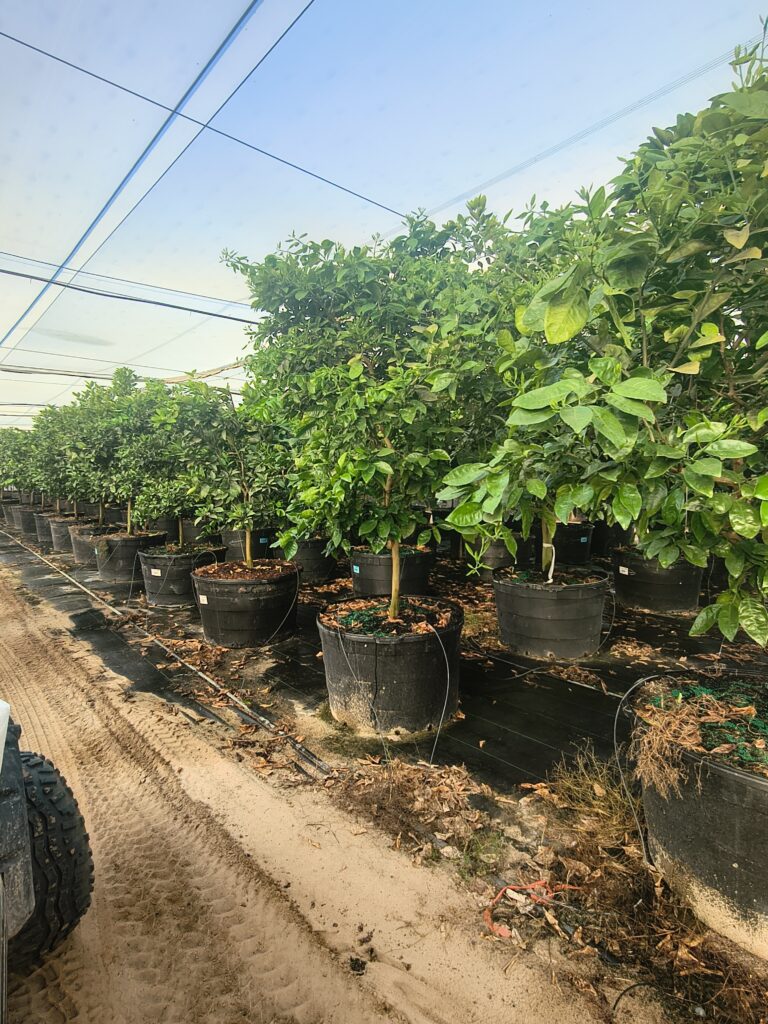
Buying healthy fruit trees that are ready for strong growth gives your feeding program a solid start. A tree grown well from the beginning has a strong root system and clean, green leaves. Our nursery raises trees suited specifically to Central Florida yards and climate. When you plant strong stock, your fertilizer builds on a healthy base instead of fixing old problems. Weak or stressed trees will struggle no matter how carefully you feed them. Starting right makes every step after planting so much easier.
We offer a wide range of fruit trees for Central Florida homeowners to choose from. Our selection includes citrus like orange, lemon, lime, and grapefruit trees. We also grow mango, avocado, peach, fig, guava, and many other proven varieties. Each tree is chosen to handle the local heat, sandy soil, and long growing season. Our team helps you match the tree to your space, your sunlight, and your goals. With the right variety in the ground, healthy growth comes to you much more easily.
Free estimates for delivery and planting make it simple to get your orchard started. Our crew can bring your new tree to your property and plant it correctly the first time. Proper planting depth and placement set the stage for years of healthy, steady growth. We position each tree for the sunlight and drainage it needs to truly thrive. This service takes the heavy work off your shoulders and reduces those early mistakes. From the nursery to your yard, we help your orchard start strong and stay strong.
Why Choose Paul’s Nursery for Healthy Fruit Tree Growth
Homeowners choose Paul’s Nursery because we treat every yard like it were our own. Our family has grown fruit trees for over one hundred and twenty five years now. That long tradition shapes the honest, careful way we serve each and every customer. We focus on healthy trees and real advice, never pushy sales tactics. When you visit, you talk with people who actually grow and care for these trees daily. That deep experience gives you confidence in every tree you take home.
We stand behind both the trees and the guidance we provide to you. Our goal is a thriving backyard orchard for your family, not just a single quick sale. We take the time to answer questions and clearly explain the care your trees need. Free estimates for delivery and planting show our real commitment to a strong start. Homeowners across Central Florida trust us for both quality stock and steady support. That trust is built one healthy tree at a time, year after year.
Getting started with Paul’s Nursery is easy, friendly, and stress free. Visit us at 13844 Equestrian Dr in Groveland to see our healthy fruit trees in person. Ask our team about the best feeding schedule for your yard and your specific goals. We will help you pick strong trees and plan for healthy growth all year long. Call us today at (352) 536-4893 to plan your visit or set up delivery and planting. Let us help you grow a backyard orchard that produces for many years to come.