How to Protect Young Fruit Trees From Their First Cold Snap
A young fruit tree planted this year faces one big test before it ever produces a full crop, and that test arrives on the first cold night of the season. Central Florida winters stay mild most of the time, but Lake County still sees frost events and the occasional hard freeze that drops temperatures into the twenties for several hours. Trees that have been in the ground for a decade usually shrug those nights off, while a tree planted a few months ago can lose every leaf or die back to the graft. The difference comes down to root development, trunk diameter, and the amount of stored energy the tree carries into winter. Planning for that first cold snap now, while the weather is still warm and the tree is putting on growth, gives you far better results than scrambling for blankets the night a freeze warning appears on your phone. This guide covers what actually happens to young fruit trees in cold weather, which species need the most attention around Groveland and Clermont, and the specific steps that keep a young tree alive through its first winter. Everything here applies to backyard orchards, single specimen trees, and container grown trees on a patio.
What Happens to Young Fruit Trees During Their First Cold Snap
Cold damage is not one single event, and understanding the difference between the types of cold weather Central Florida gets will tell you how much protection your trees actually need. A frost forms on clear, calm nights when heat radiates away from the ground and plant surfaces drop below the air temperature, which means damage can occur even when the thermometer on your porch reads thirty four degrees. A freeze is different, since it involves an air mass cold enough to drop the entire area below thirty two degrees, sometimes with wind that strips away any warmth held near the soil. Radiational frost events respond very well to covers and to water, because you are trapping heat that is trying to escape upward. Advective freezes, the kind that arrive behind a strong front with steady wind, are harder to fight and call for more aggressive protection. Young trees suffer more in both situations because they have thin bark, shallow roots, and tender new growth that has not hardened off. Knowing which type of event is coming changes what you do that afternoon.
How a First Cold Snap Damages Young Fruit Tree Leaves and Wood
Damage starts at the cellular level, and it starts with water. When temperatures fall below freezing, ice crystals form in the spaces between plant cells, and those crystals pull moisture out of the cell walls as they grow. The cell collapses from dehydration rather than from the cold itself, which is why damaged leaves look water soaked and dark the next morning before turning brown and crisp a few days later. Leaves are usually the first casualty because they are thin, exposed, and full of moisture with very little insulating tissue around them. On a young citrus tree, leaf burn often shows up after a few hours near twenty eight degrees, though the exact threshold shifts with how gradually the temperature dropped and how long the cold lasted. A slow decline over several hours does less harm than a sudden plunge, since the tree has some ability to move water and sugars around in response.
Wood damage runs deeper and matters far more for the survival of the tree. Small diameter branches freeze faster than thick ones because they hold less mass and lose heat quickly from a large surface area relative to their volume. When the cambium layer just under the bark freezes, that tissue dies, and the branch above it loses its ability to move water and nutrients. You may not notice this for weeks, since a dead branch on a citrus or mango tree can hold green leaves for a surprising length of time before everything collapses at once. Bark splitting is another common sign, usually appearing as vertical cracks along the trunk or on the sunny side of major limbs. Those splits happen when the outer wood warms rapidly in the morning sun while the interior is still frozen, and they create an entry point for disease that lingers long after the cold weather ends.
The graft union is the single most important spot on any young grafted fruit tree, and it deserves the bulk of your protection effort. Almost every citrus tree, avocado tree, and stone fruit tree sold in Florida is grafted, meaning the fruiting variety on top is joined to a separate rootstock below. If cold kills the wood above that union, the tree may push new growth from the rootstock, and that growth will never produce the fruit you bought the tree for. Protecting the lowest twelve to eighteen inches of trunk, including the graft, preserves your ability to rebuild the canopy from living tissue even after a severe freeze. Growers in this region learned that lesson during the freezes of the nineteen eighties, when trees with banked soil around their trunks survived while unprotected trees of the same age and variety were lost completely. The canopy is replaceable over a season or two; the graft union is not.
Why Young Fruit Trees Handle a Cold Snap Worse Than Mature Trees
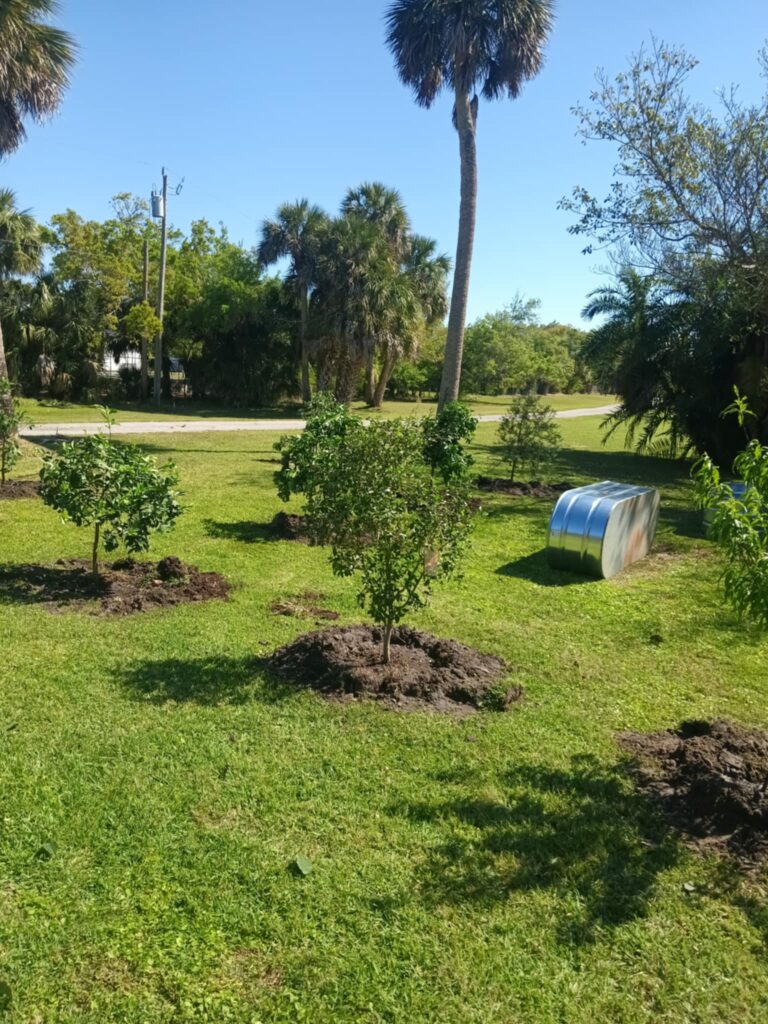
Root systems explain most of the gap between a young tree and an established one. A tree planted this year still has roots concentrated inside or just beyond its original root ball, which means it draws water from a small volume of soil near the surface. Soil at that depth cools quickly on a cold night and warms quickly the next day, so the roots experience the temperature swing directly. A mature tree has roots spreading well past the drip line and reaching down into soil that stays in the sixties year round, which buffers the entire plant. That deeper root system also stores carbohydrates, and stored energy is what lets a tree repair damaged tissue and push new growth when spring arrives. A young tree with limited reserves may survive the freeze itself and then decline slowly over the following months because it simply lacks the fuel to recover.
Trunk mass works the same way. A three inch trunk holds a large amount of thermal mass and takes hours longer to reach a damaging temperature than a three quarter inch trunk on a nursery tree. Thicker bark on an older tree adds real insulation, while the smooth green bark on a young citrus or a young avocado offers almost none. Canopy size matters too, since a broad mature canopy traps a layer of warmer air underneath it and shelters the trunk from the open sky. A small tree with four or five branches has no such shelter and loses heat from every surface at once. This is also why a young tree planted in the open middle of a lawn fares worse than the same tree planted near a south facing wall or under high pine canopy. Site selection made at planting time quietly determines how much work you will do every winter after that.
Growth timing is the third factor, and it is the one homeowners most often create themselves. A tree that is actively pushing soft new growth in November has no cold tolerance in that tissue, because tender shoots contain high moisture and low sugar concentrations. Trees that slow down naturally in fall go through a hardening process where sugar levels rise in the cells and act something like antifreeze. Heavy nitrogen fertilizer applied late in the season overrides that process and keeps the tree in growth mode right into the coldest part of winter. Warm autumn weather in Central Florida can do the same thing, especially in a year when temperatures stay in the eighties through October. The result is a flush of soft growth that gets burned by the first frost even at temperatures the rest of the tree would have handled without a problem.
Which Central Florida Fruit Trees Are Most at Risk in a Cold Snap
Tropical species sit at the top of the risk list, and they need protection at temperatures that other trees ignore. Young mango trees show leaf damage in the low thirties and can suffer serious wood injury below thirty degrees, with the youngest trees being the most sensitive of all. Avocado tolerance varies quite a bit by type, since Mexican race varieties handle cold better than the West Indian types, but a first year avocado of any variety needs covering during a freeze. Bananas lose their leaves at thirty two degrees and their pseudostems near twenty eight, though a well mulched corm underground usually survives and resprouts in spring. Papaya, star fruit, and passion fruit vines also fall into the tender group and benefit from covers on any night forecast below the mid thirties. If you are building a tropical section in your yard, group these trees together so that one round of covering handles all of them. You can browse the full tropical selection and get planting advice on our fruit trees for sale page before the cool season arrives.
Citrus occupies the middle ground and represents the largest share of backyard fruit trees in Lake County. Mature citrus can handle brief dips into the mid twenties with only leaf damage, but a first year tree is far more vulnerable and may lose its entire canopy at temperatures near twenty eight degrees. Hardiness also varies by type within the citrus family. Kumquats and satsuma type tangerines rank among the toughest, oranges and grapefruit sit in the middle, and limes along with lemons rank as the most cold sensitive of the common backyard choices. A young Key lime in an open yard is one of the most freeze prone trees you can plant in this area, while a young kumquat in the same spot often comes through untouched. Choosing types with the cold tolerance to match your specific yard removes a great deal of winter labor. Our tangerine tree page covers the varieties that perform best in Central Florida yards.
The temperate group needs the least attention, and in some cases the cold actually helps them. Figs, pomegranates, mulberries, loquats, persimmons, olives, blueberries, and blackberries handle Central Florida freezes without any intervention once established. Peaches, plums, nectarines, pears, and apples grown here are low chill varieties that require a certain number of hours below forty five degrees in order to set fruit properly, so a cool winter improves the following harvest. Even in this group, a tree planted within the last few months deserves a layer of mulch and a wrapped trunk during its first winter, since the root system has not spread yet. Loquats present one special case worth knowing about, because they bloom in fall and early winter, and a hard freeze can destroy the developing fruit without harming the tree at all. Mixing hardy species with tropical ones gives your yard a harvest that continues even in a rough winter. That balance is exactly what we help homeowners plan when they visit the nursery.
How to Protect Young Fruit Trees Before and During a Cold Snap
Protection works best as a layered approach rather than a single tactic applied the hour before sunset. The goal is simple: trap heat that the soil absorbed during the day, keep it near the trunk and root zone overnight, and prevent cold air from settling directly against tender tissue. Every method described below serves one of those three purposes. The most effective plans combine soil moisture, ground level mulch, trunk insulation, and an overhead cover, because each one covers a weakness in the others. Timing matters as much as technique, since a cover installed at eight in the evening traps far less warmth than one installed in the late afternoon while the ground is still radiating heat. Watch the forecast for the low temperature, the duration below freezing, the wind speed, and the cloud cover, since those four numbers together tell you how much effort a given night requires.
Covering Young Fruit Trees the Right Way Before a Cold Snap
A cover works by trapping radiant heat rising from the soil, which means it has to reach the ground to do anything useful. Draping a sheet over the canopy and tying it at the trunk creates a chimney that lets warm air escape and delivers almost no benefit. Instead, build a simple frame with stakes, tomato cages, or PVC around the tree, then drape the cover over the frame so the fabric extends to the soil on all sides. Weight the edges down with bricks, soil, or landscape staples so wind cannot lift them during the night. Commercial frost cloth is the best material for the job, since it breathes, sheds a bit of moisture, and typically holds four to eight degrees of warmth under calm conditions. Old blankets, moving quilts, and burlap all work reasonably well too, and there is no need to buy anything fancy for a single tree.
Plastic requires extra care and causes more damage than any other covering mistake. Any leaf touching plastic will freeze, because the plastic conducts cold straight through to the tissue and provides no insulation at the point of contact. Use plastic only as an outer layer over frost cloth or a frame, never directly against foliage. Remove or vent covers of any kind the following morning once the air temperature climbs above freezing, since trapped sunlight can heat the interior into the nineties within a couple of hours and cook the tree you just saved. On a multi night cold event, you can leave breathable frost cloth in place during the day if the sky stays overcast and highs remain in the forties. Plastic always comes off in daylight. Keep the covers stored somewhere accessible so the routine takes ten minutes rather than an hour.
Trunk protection deserves its own step and stays in place for the whole season. Wrap the bottom twelve to eighteen inches of trunk with foam pipe insulation, tree wrap, fiberglass batting, or several layers of cardboard secured with tape or twine. This shields the graft union and the lower cambium, which are the tissues that determine long term survival. Commercial growers in this region historically banked soil up around young citrus trunks for the same reason, and that method still works if you remove the soil in early spring to prevent rot and pest problems. Trunk wraps also block the rapid temperature swings that cause bark splitting on the sunny side of the trunk. Leave the wrap loose enough that air can move and moisture does not sit against the bark for months. Check it every few weeks for insects or rodents that decide to move in.
Watering and Mulching Young Fruit Trees Ahead of a Cold Snap
Moist soil holds and releases far more heat than dry soil, which makes irrigation one of the cheapest protection tools available. Water your young trees deeply one or two days before a predicted freeze, saturating the root zone rather than just wetting the surface. Wet soil absorbs solar energy through the day and then radiates that heat back upward through the night, and the effect can raise the temperature near the trunk by a couple of degrees. Bare, firm, moist soil performs better than soil covered in tall grass or loose organic debris, since vegetation blocks the ground from absorbing heat in the first place. Clear weeds and turf from a circle around the trunk before winter for that reason. Do not water the foliage the night of the event unless you are running a proper microsprinkler system, because a light misting followed by evaporation actually cools the plant.
Microsprinkler irrigation is a genuine freeze protection method used throughout Florida agriculture, and it works on a principle that surprises most homeowners. As water freezes, it releases heat, and that release holds the tissue under the ice at roughly thirty two degrees no matter how cold the surrounding air gets. The critical rule is that the water must run continuously from before the temperature reaches freezing until the ice fully melts the next day. Shutting the system off partway through causes worse damage than never running it at all, because evaporation then pulls heat out of the already stressed tissue. Ice loading can also break branches on a young tree, so aim low volume emitters at the trunk and lower scaffold rather than the entire canopy. For most backyard growers with a few trees, covers and mulch make more sense than building an irrigation setup.
Mulch protects the roots and the crown, and it is the one step that pays off every single day of the year. Apply two to four inches of pine bark, pine straw, wood chips, or leaves over the root zone, extending out to the drip line and beyond. That layer slows heat loss from the soil, moderates temperature swings, holds moisture, and suppresses the weeds that compete with young roots. Keep the mulch pulled back two to three inches from the trunk itself, since material piled against the bark holds moisture and invites rot, fungal problems, and rodents. Bananas and other trees that regrow from underground tissue benefit from a heavier mulch layer, because saving the corm means saving the plant. Refresh the mulch each fall as the old material breaks down. Homeowners across Clermont and the surrounding area can stop by the nursery for guidance on the right mulch depth for their specific soil.
Fall Feeding and Pruning Habits That Prepare Young Fruit Trees for a Cold Snap
Fertilizer timing controls how much tender growth your tree carries into winter, and getting it wrong undoes every other precaution. Stop applying nitrogen to young citrus, mango, and avocado trees by early fall so the tree can slow its growth naturally and harden off. Nitrogen applied in October or November pushes a soft flush that has almost no cold tolerance, and that flush will burn on the first frost even at temperatures the mature wood would ignore. Potassium, on the other hand, supports cold hardiness and general stress tolerance, so a fall application of a low nitrogen and higher potassium product can help. Resume your normal feeding schedule in late winter once the risk of a hard freeze has passed for the year. Young trees still need steady nutrition to establish, so the point is adjusting the timing rather than starving the tree.
Pruning follows the same logic. Every cut stimulates growth near the wound, so pruning in fall triggers exactly the tender flush you are trying to avoid. Hold structural pruning of citrus and tropical trees until late February or March in this region, once the cold season has clearly ended. Deciduous fruit trees such as peaches, plums, and nectarines are pruned in winter while dormant, and that timing is fine because dormancy removes the risk of a soft flush. The only cuts worth making in fall are removals of clearly dead or diseased wood. Leaving the canopy intact through winter also provides a bit of self protection, since outer branches shelter the interior and the trunk.
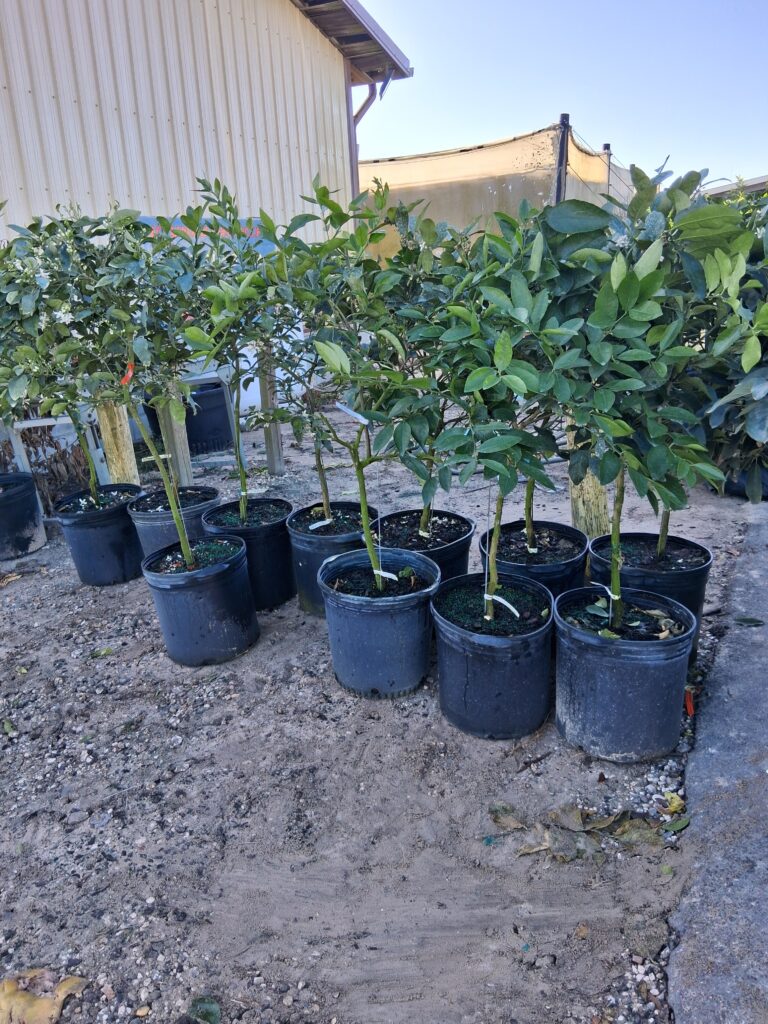
Container grown trees have the easiest protection method of all, since you can simply move them. Pots offer no soil buffer around the roots, and root tissue is less cold hardy than the wood above ground, so a potted tree can suffer root damage on a night that leaves an identical in ground tree untouched. Move containers into a garage, a shed, or against a south facing wall of the house before the temperature drops. If moving is not practical, group the pots together and wrap the outside of the cluster with blankets or bagged mulch to insulate the sides. Water container trees before a freeze just as you would trees in the ground, since dry potting soil offers even less thermal mass. Bring them back into full sun as soon as the weather warms so the tree does not stretch for light.
Why You Need a Cold Snap Plan for Your Young Fruit Trees This Season
Winter protection is not complicated, but it does require a decision made in advance rather than a reaction the night of a freeze warning. Gathering your covers, stakes, mulch, and trunk wrap now means the actual work takes twenty minutes when the forecast turns. It also means you pick the right trees for the right spots in your yard from the beginning, which reduces the number of nights you spend outside with a flashlight and a blanket. A young fruit tree represents both money and years of waiting, and a single unprotected freeze can erase both. The homeowners with the best backyard orchards in Lake County are the ones who planned for winter during the planting season. That planning starts with an honest conversation about your site, your goals, and how much maintenance you actually want to take on.
Planning Ahead Protects Your Investment in Young Fruit Trees
The trees you plant this year are the trees you will harvest from for decades, so the first winter carries outsized importance. A citrus tree that keeps its canopy intact through its first cold season will typically fruit a full year earlier than one that gets knocked back to the trunk. Recovery consumes stored energy that would otherwise go into root expansion and flower production, which is why a freeze damaged tree often stalls for two seasons rather than one. Protecting a small tree costs very little compared to replacing it and starting the clock over. Assemble a simple winter kit with frost cloth, a few stakes, trunk insulation, and landscape staples, and store it where you can reach it quickly.
Site selection does more for cold protection than any cover ever will. Cold air is dense and flows downhill, pooling in low spots and stopping behind fences, hedges, and berms, which creates frost pockets that can run several degrees colder than ground fifty feet away. Planting tender species on higher ground and leaving a path for cold air to drain past your yard makes a measurable difference. South facing walls absorb sun through the day and release heat at night, and the strip of ground within a few feet of that wall stays noticeably warmer. The lakes throughout this part of Lake County provide a similar effect and are the reason citrus has been grown around Groveland and Clermont for well over a century. Look at your property carefully before you dig.
Variety choice is the last piece and often the smartest one. Matching cold tolerance to your specific site means the tree handles most winters on its own without any intervention from you. A homeowner who wants tropical fruit can still grow it successfully by placing those trees in the most sheltered microclimates and accepting that a few nights per year require covering. Someone who travels in winter or simply prefers low maintenance should lean toward figs, pomegranates, loquats, persimmons, blueberries, and low chill stone fruit. Most yards have room for both approaches, and a mixed planting spreads your harvest across more months of the year. Talk with us about your specific lot before you buy, and we will point you toward varieties that suit it.
What to Do After a Cold Snap Damages Young Fruit Trees
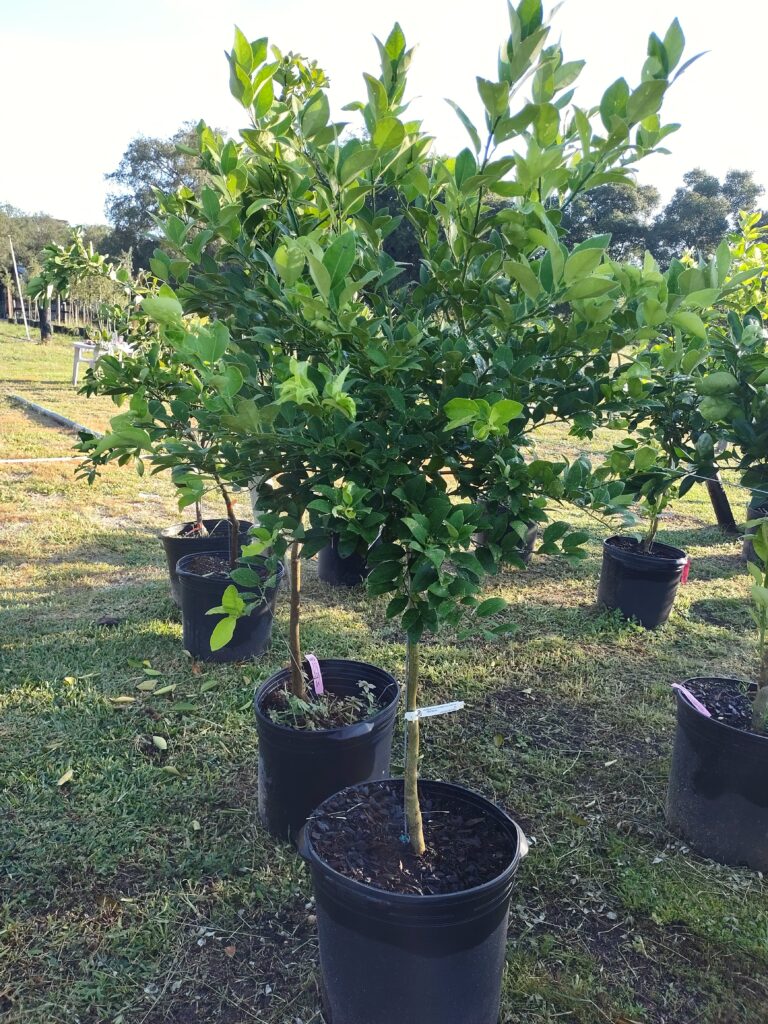
Patience is the correct response to freeze damage, and the most common mistake is cutting too soon. Wood that looks dead in January often pushes new growth in March, because the extent of injury is not visible until the tree begins actively growing again. Wait until you see clear new growth in spring, then prune back to the point where living tissue begins. Scratching the bark with a thumbnail to check for green underneath gives you a rough idea, though that test can mislead you on a tree with partial cambium damage. Leaving the damaged wood in place through the rest of winter also shelters the tissue below it from any additional cold events.
Burned leaves should be left alone as well. Dead foliage still provides a small amount of insulation for the branches underneath, and stripping it off exposes bare wood to the next cold night. The tree will drop those leaves on its own schedule once it resumes growth. Hold off on fertilizer until you see active new growth, since feeding a stressed tree with a compromised root system can push growth the tree cannot support. Keep the soil evenly moist during recovery, because damaged tissue struggles to move water efficiently. Watch for sprouts emerging from below the graft union and remove them promptly, since rootstock growth will overtake the desirable variety if allowed to continue.
Some trees will not recover, and recognizing that early lets you replant in the same season. A tree with bark splitting all the way around the trunk, or one that shows no new growth at all by late spring, is generally finished. Replanting in spring gives the new tree a full growing season to establish roots before the following winter, which is the single best thing you can do for its odds. Choose a hardier variety or a better protected spot if the same location has now lost a tree twice. Bring us photos of the damage and we will tell you honestly what we think the tree’s chances are. Our full selection of fruit trees includes plenty of options suited to tougher spots in a yard.
Why Choose Paul’s Nursery for Cold Hardy Fruit Trees in Central Florida
Paul’s Nursery brings more than one hundred twenty five years of family nursery tradition to every recommendation we make, and that history is built on Central Florida conditions specifically. We grow and sell citrus, mango, avocado, and tropical fruit trees alongside hardy options such as figs, pomegranates, loquats, mulberries, blueberries, and low chill peaches and plums. Because we work in this climate every day, we know which varieties handle a Lake County winter and which ones need a sheltered spot to succeed. We will tell you when a tree is a poor fit for your yard rather than selling you something that struggles. Honest recommendations have kept this family owned nursery going for generations.
We serve homeowners throughout Groveland, Clermont, Winter Garden, The Villages, Leesburg, Mount Dora, Eustis, Tavares, Minneola, Mascotte, Apopka, Ocoee, and the surrounding communities. Free estimates are available for delivery and planting, and proper planting is a real part of winter survival since a well established root system is the foundation of cold tolerance. Our team can walk you through cover techniques, mulch depth, trunk wrapping, and fall fertilizer timing for the specific trees you buy. We help homeowners build complete backyard orchards that produce fruit across multiple seasons instead of a single short window. Every tree that leaves our nursery comes with the information you need to keep it alive.
Now is the right time to plan your winter protection and to choose the trees that will handle Central Florida’s cold nights with the least amount of work. Visit us at 13844 Equestrian Dr in Groveland, browse our complete tree selection, or reach out with questions about a tree you already have in the ground. We are happy to look at photos, talk through your yard’s layout, and recommend a plan that fits your property and your schedule. Call Paul’s Nursery at (352) 536-4893 or email info@floridafruittree.com to get started, and we will help you get your young fruit trees through their first cold snap in good shape.