How to Tell When Your Oranges Are Ready to Harvest
Central Florida homeowners plant orange trees expecting fruit, and the hardest part of the entire process is knowing the exact moment that fruit is worth picking. An orange that looks perfect on the outside can still be sour enough to ruin a glass of juice, while a fruit carrying green patches across the peel can already be at its sweetest. Timing matters more with citrus than with almost anything else in a backyard orchard, because an orange stops improving the moment it leaves the branch. There is no ripening on the kitchen counter, no softening inside a paper bag, and no second chance after a bad pick. The good news is that reading a tree correctly takes only a few minutes once you understand which signals actually indicate maturity in this climate. Late summer is the right time to learn all of this, since the first crops of the season begin coloring in October and the fruit hanging in your yard right now is still sizing up. This guide covers variety timing, the signs that matter, the signs that mislead, and the picking habits that protect your fruit after it comes off the tree.
When Different Orange Varieties Are Ready to Harvest in Central Florida
The single biggest factor in harvest timing is the variety growing in your yard, not the calendar and not the weather in any given week. Central Florida supports early, midseason, and late oranges, and the spread between the first ripe navel and the last ripe Valencia covers roughly eight months. Homeowners who plant one of each can pick fresh fruit from November all the way into June without buying a single orange at the store. Trouble starts when someone assumes every orange behaves the same way and tries to pick a late variety in December. That fruit will be sour, thin on juice, and disappointing enough to make people think the tree failed. Knowing which variety you own tells you when to start testing, and testing tells you when to start picking. If you are not certain what is growing in your yard, the fruit shape, seed count, and peel thickness usually give the answer away.
Navel Oranges Are Ready to Harvest First in Central Florida
Navels are the first sweet orange most Groveland and Clermont yards produce each season, with fruit generally reaching maturity between early November and the middle of January. The tree sets a lighter crop than most juice varieties, but individual fruit runs large, and the peel separates from the segments with very little effort. You can identify the variety by the small secondary fruit at the blossom end, which appears as a shallow opening in the rind that looks like a navel. Fruit on the outer edge of the canopy fills out first because it collects the most direct sunlight through the fall months. Growers across Lake County often find usable fruit during the first week of November in a warm year, and closer to Thanksgiving in a cooler one. A cold snap in late October actually helps, since chilly nights break down the green pigment in the peel and push acid levels down at the same time. Once the first fruit begins to color, start checking the tree every few days.
Navels do not hold on the tree the way later varieties do, and this catches new growers off guard almost every season. Fruit left hanging past January tends to dry out inside, developing coarse, pale segments that give up very little juice when squeezed. The flavor also flattens as acid continues to drop, leaving fruit that tastes sweet in a dull way with none of the brightness people expect from fresh citrus. There is a second issue specific to this variety, which is that navel juice turns bitter fairly quickly after squeezing because of a natural compound in the fruit. That makes navels a poor choice for juicing in advance and an excellent choice for eating fresh, sectioning into salads, or juicing right before you drink it. Plan on clearing the tree over a period of six to eight weeks rather than leaving everything in place until you feel like picking. The fruit will reward you for staying on schedule.
A practical approach is to harvest in small rounds instead of stripping the whole tree in one afternoon. Start with the fruit at the top and outer edges of the canopy, since that fruit receives more sun and reaches maturity ahead of everything growing in the shaded interior. Pick what your household can realistically eat in a week or two, then come back for the next round once you see the interior fruit finish coloring. This staggered method keeps every orange at its peak instead of forcing you to store a hundred pieces of fruit at once. It also gives you a running taste record of how the tree is progressing through the season. Keep a few pieces of fruit on the tree at the very end as a reference point, so you can see for yourself how quality declines when a navel hangs too long. That lesson sticks better than any advice ever could. Ready to add an early season variety to your property? Click here to see our orange trees for sale.
Hamlin Oranges Are Ready to Harvest Through the Early Winter
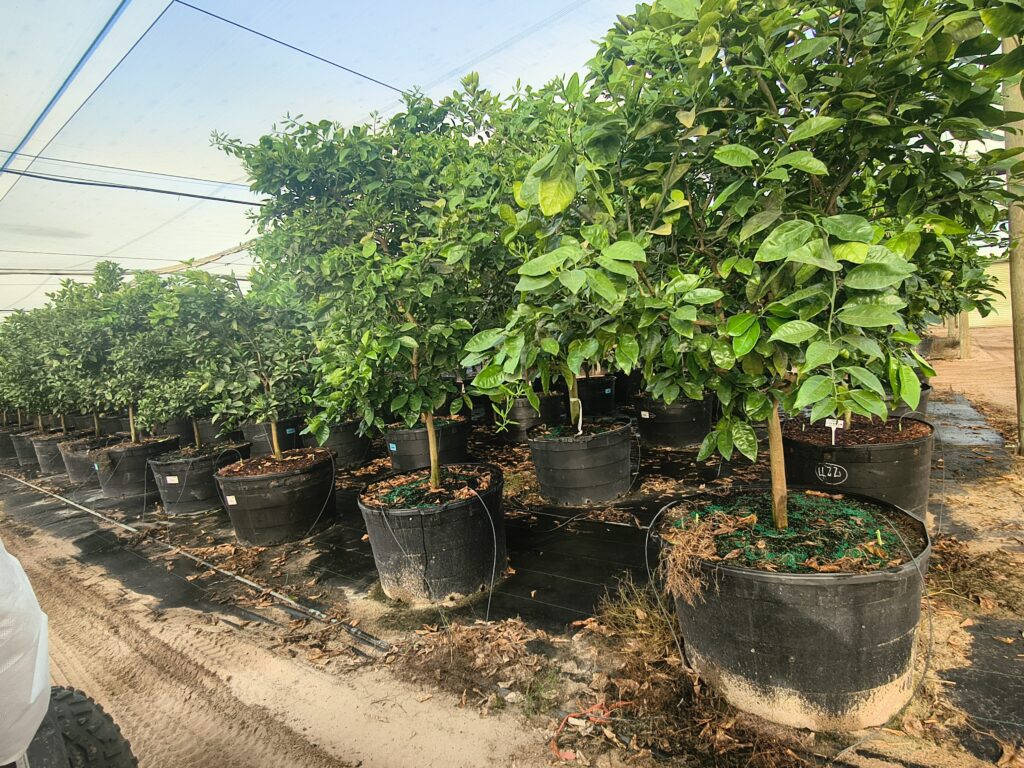
Hamlin is the workhorse early juice orange across Florida, and backyard trees usually produce mature fruit from October through December or into January. The fruit runs smaller than a navel, carries a thin smooth peel, and holds very few seeds or none at all. What Hamlin lacks in size it makes up for in volume, since a mature tree can carry an enormous crop and keep producing reliably year after year. The juice color runs lighter than what most people picture when they think of Florida orange juice, and the sugar level sits a bit below the midseason and late varieties. None of that stops it from being one of the most popular yard trees in Lake and Sumter counties. It produces early, it produces heavily, and it handles cold nights better than many other sweet oranges.
The early maturity of this variety creates a specific challenge in Central Florida, because the fruit often reaches internal maturity before the peel finishes coloring. October and November nights here frequently stay warm enough that the rind holds onto green tones long after the segments inside have sweetened. Commercial packers deal with this by treating harvested fruit with ethylene gas to bring out the orange color, which changes appearance only and does nothing to the flavor. In your own yard, the fix is simply to ignore the peel and taste a piece of fruit instead. Pull one orange from a sunny section of the canopy in mid October, cut it open, and judge it on juice content and flavor alone. If it tastes good, the crop is ready regardless of how the outside looks. If it tastes sharp and thin, wait ten days and repeat the test.
Hamlin holds on the tree better than a navel but not indefinitely, and quality generally starts sliding once you move deep into January. Fruit that hangs too long loses acid to the point where the juice tastes flat, and the segments start drying in the same way navels do. Cold weather adds another consideration, since temperatures in the middle twenties can damage fruit that is still on the branch and cause internal drying and ice damage in the segments. When a hard freeze appears in the forecast and your fruit is already mature, harvesting ahead of the cold is the safer move. Squeeze what you cannot eat and freeze the juice, which stores well for months and captures the crop at its best. Most families with one mature Hamlin tree end up giving away bags of fruit, so line up neighbors in advance. The tree will produce far more than you expect.
Valencia Oranges Are Ready to Harvest Late in the Spring
Valencia is the last orange to finish each season, with fruit generally maturing from March through June in Central Florida. This variety takes roughly a full year from bloom to harvest, which means a mature Valencia often carries two crops at the same time. You will see last season’s ripening fruit hanging on the same branches as this season’s new flowers and pea sized green fruit, which surprises people the first time they notice it. The reward for that long hang time is flavor, since Valencia produces the deepest color and richest juice of any orange grown in the state. The peel clings tighter than a navel and the fruit contains a few seeds, so it earns its living as a juice orange rather than a snack. Patience is the requirement, because a Valencia picked in January tastes terrible and a Valencia picked in April tastes outstanding. The calendar difference is only a few months, but the quality difference is enormous.
This variety produces the single most misleading visual signal in all of Florida citrus, which growers call regreening. Warm spring weather pushes green pigment back into the peel of fully mature fruit, so an orange that looked perfect in February can develop green shoulders by April while the inside continues improving. Anyone who judges a Valencia by peel color in the spring will either pick far too early or leave good fruit hanging out of confusion. The only reliable approach with this variety is to taste test starting in early March and continue testing every ten days or so. Once the flavor turns rich and the juice runs heavy, start picking regardless of what the rind looks like. Fruit picked green on the outside during a warm spring is frequently the best fruit the tree produces all year.
The other advantage of Valencia is its ability to hold on the tree without falling apart, which gives you a long and forgiving harvest window. Fruit can stay in place for weeks after reaching maturity while sugar levels continue to climb, so you can pick as you need instead of racing a deadline. That said, holding a heavy crop into June competes with the new crop the tree is trying to set, and it can reduce next season’s yield. Clear the tree by early summer to keep production steady from one year to the next. Rain also becomes a factor as the wet season arrives, since fruit that swells quickly after a heavy storm sometimes splits at the blossom end. Pick promptly once the flavor peaks and you avoid most of that loss. Interested in stretching your harvest across the whole year? Click here to browse our full selection of fruit trees for sale.
The Signs That Tell You Oranges Are Ready to Harvest
Once you know your variety and the general window it falls into, the tree itself provides the rest of the information you need. Orange trees give several honest signals about maturity, and they also give one very convincing false signal that fools people constantly. Learning to separate the two is the difference between a good harvest and a batch of sour fruit. Commercial growers settle the question with laboratory testing that measures sugar against acid, and Florida sets legal minimums for juice content and that ratio before fruit can be sold. Home growers do not need equipment for any of this, because the same information is available through careful observation and a simple taste test. The key point is that internal maturity and external appearance move on separate schedules in a subtropical climate. Trust what is inside the fruit.
Why Peel Color Does Not Tell You Oranges Are Ready to Harvest
Peel color is the least reliable maturity indicator in Florida, and it causes more harvest mistakes than every other factor combined. Oranges turn orange when cool nights break down the green pigment in the rind and reveal the underlying color, which is a temperature response rather than a ripening process. In a cold climate the two happen to line up, so color and flavor arrive together and the visual shortcut works. Central Florida nights often stay too warm for that pigment breakdown to finish, which leaves mature fruit wearing a green or yellow green rind well into the season. Growers in genuinely tropical regions harvest fully sweet oranges that never turn orange at all. The color in your grocery store bag reflects the weather the fruit experienced, not the sugar it contains.
The reverse mistake is just as common and just as costly. Fruit can develop beautiful full color weeks before the inside is ready to eat, especially after an early cold front moves through in October. Homeowners see a bright orange tree, pick a basket, and end up with fruit so acidic that nobody wants a second bite. That experience convinces some people their tree is defective, when the tree was simply doing exactly what it should. Color arrived first and flavor was still on its way. A single unnecessary week of waiting would have solved the problem entirely.
Use color as a starting cue and nothing more. When the peel begins shifting away from deep green, that tells you the season has started and it is time to begin testing fruit. From that point forward, ignore the outside of the orange completely and make every harvest decision based on taste and juice. This applies double to Valencia in the spring, since regreening actively works against the visual signal. It applies to Hamlin in the fall, where fruit sweetens ahead of the color change. Train yourself to reach for a knife instead of trusting your eyes, and your harvest quality improves immediately.

The Taste Test That Tells You Oranges Are Ready to Harvest
Sampling fruit is the only method that gives you a direct answer, and it costs you one orange. Choose a test fruit from the top or outer edge of the canopy on the sunniest side of the tree, because that fruit matures ahead of anything growing in the shaded interior. Cut it in half across the middle rather than through the stem, which lets you see the segments and judge how full of juice they are. Good mature fruit shows plump segments and releases juice readily when you press it. Immature fruit looks dry inside with thicker white pith and gives up very little liquid. Taste a section and pay attention to the balance between sweetness and tartness rather than sweetness alone.
Sugar and acid both move during the ripening process, and their relationship determines quality. Acid levels fall steadily as the fruit matures while sugar levels climb, so an orange picked too early tastes aggressively sour and one picked at the right moment tastes bright and full. Florida maturity standards for oranges are built around this relationship, requiring a minimum ratio of soluble solids to acid before fruit can go to market. You do not need to measure anything at home, because your palate registers the same change accurately. If the fruit makes you wince, it needs more time. If it tastes rich and pleasant with just enough tartness to keep it interesting, the crop is ready.
Set a testing schedule and stick with it rather than checking at random. Begin sampling roughly two weeks before your variety’s expected window opens, then test again every seven to ten days until the flavor arrives. Interior fruit and fruit on the north side of the tree usually trail the rest of the canopy by a week or two, so test a piece from the shaded side before you assume the entire tree is finished. Keep brief notes on dates and results, because that record becomes genuinely useful in future seasons once you learn how your particular tree behaves. Trees in different parts of the same yard can run on noticeably different schedules based on sun exposure and soil. After two or three seasons you will know your tree well enough to predict its timing within a week.
Weight, Feel, and Fruit Drop That Tell You Oranges Are Ready to Harvest
Weight is one of the more dependable physical signals, since a mature orange is heavy for its size because the segments are loaded with juice. Lift a few pieces of fruit and compare them against one another, and the difference between a full orange and a light one becomes obvious with a little practice. A mature fruit also gives slightly under gentle pressure while an immature one feels hard and unyielding across the entire surface. Rock hard fruit almost always needs more time on the tree. Fruit that feels soft, hollow, or spongy has gone the other direction and stayed too long. The peel on ready fruit usually smooths out and thins somewhat compared to the thick, pebbly rind of young fruit.
Natural fruit drop tells you something too, though it requires interpretation. Trees shed a portion of their crop in late spring and early summer as a normal self thinning process, which is nothing to worry about and happens every year. Drop that occurs near the end of the maturity window generally means the crop has finished and the tree is releasing fruit that has hung as long as it can. Drop that comes with small, lopsided, bitter fruit at any point in the season is a different matter and often points to disease pressure, particularly citrus greening. Fruit affected by that disease stays partly green at the blossom end, tastes sour and metallic, and frequently contains dark aborted seeds. If that pattern shows up on your tree, the harvest question is secondary to a broader tree health question.
Late summer conditions in Central Florida create two additional situations to watch. Heavy rain following a dry stretch causes fruit to take up water faster than the peel can expand, which splits some oranges open at the blossom end during August and September. Split fruit will not recover and should be removed and discarded so it does not attract pests or rot at the base of the tree. Storm season also knocks immature fruit to the ground, and there is no way to salvage green oranges since they will never sweeten off the branch. Squirrels, rats, and birds tend to sample fruit right around the time it reaches maturity, which is an unintentionally useful indicator that the crop is close. When wildlife starts working your tree, get out there and test a piece yourself.
Why You Need Healthy Orange Trees to Harvest Great Fruit Every Season
Harvest timing only matters when the tree underneath it is worth harvesting from, and that comes down to variety selection and root health from day one. A tree that is properly matched to Central Florida conditions produces consistent crops with predictable timing you can actually plan around. Poor stock, wrong variety, and bad rootstock choices produce years of frustration no amount of careful picking can fix. Paul’s Nursery has spent generations helping Lake County families choose trees that perform in local soil and local weather. We would rather point you toward the right tree than sell you the wrong one. Getting that decision correct once pays off every single season for decades.
Picking Techniques That Protect the Oranges You Harvest
How you remove fruit from the tree matters more than most people realize. Pulling an orange straight off the branch often tears a piece of peel away with the stem, leaving an open wound at the top of the fruit that invites mold within days. The better method is to clip the stem with hand pruners, cutting close to the fruit so no sharp stub remains to puncture the oranges stored next to it. For fruit you can reach easily, a gentle twisting motion while lifting upward usually releases the orange cleanly without damaging the rind. Take your time with the fruit at the top of the canopy and use a proper pole picker rather than yanking branches downward.
Timing your picking session also protects fruit quality in ways that are easy to overlook. Citrus peel is full of oil, and the cells holding that oil rupture easily when the fruit is swollen with water, which leaves dark sunken spots on the rind over the following days. Harvesting later in the morning after dew has dried, and waiting a day after heavy rain, prevents most of that damage. Handle the fruit like eggs rather than tossing it into a bucket from a distance. Bruises that seem harmless at the time turn into soft rotten patches during storage.
Work through the tree systematically rather than grabbing whatever is closest. Start at the outer edges where fruit matures first and move inward as the season progresses, checking a sample piece from each section before you commit to picking it. Remove any split, damaged, or clearly diseased fruit as you go and keep it separate from the good harvest. Clean up fallen fruit around the base of the tree at the same time, since rotting oranges on the ground attract pests and fungal problems. A single careful pass through the canopy every week or two beats one rushed afternoon of stripping everything at once.
Storing the Oranges You Harvest After Picking
Oranges do not continue ripening after harvest, which means storage is about preserving quality rather than improving it. Fruit kept at room temperature stays in good shape for about a week before the segments begin drying and the flavor starts to fade. Refrigeration extends that window considerably, and most oranges hold well for three to four weeks in the crisper drawer of a household refrigerator. Keep the fruit loose or in a ventilated bag rather than sealed plastic, since trapped moisture speeds up mold growth. Check the batch every few days and pull anything showing a soft spot before it spreads.
Freezing juice is the best solution for a heavy crop, and Central Florida trees produce heavy crops regularly. Squeeze the fruit, strain out the pulp if you prefer, and freeze the juice in containers with a little headspace for expansion. Frozen orange juice keeps its flavor for many months and captures the crop exactly as it tasted on picking day. Navel juice is the exception worth remembering, since it turns bitter within hours and should be consumed fresh instead of stored. Valencia and Hamlin juice both freeze without any issue at all.
The simplest storage strategy of all is to leave the fruit on the tree until you need it. Oranges hold better on the branch than in any refrigerator, particularly late varieties that continue sweetening as they hang. Pick a week’s worth at a time and let the tree handle the rest of the crop for you. Just stay aware of your variety’s limits, since navels decline after a few weeks past maturity and every variety is vulnerable during a hard freeze. Watching the forecast in January is part of growing citrus in Central Florida.
Why Choose Paul’s Nursery for the Orange Trees You Will Harvest for Decades
Paul’s Nursery brings more than 125 years of family nursery tradition to every tree that leaves our Groveland location. We grow and select stock specifically for Central Florida conditions, which means our trees are already adapted to the sandy soil, summer rain, and occasional cold nights that define this region. Our team gives honest recommendations based on what you actually want from your yard rather than pushing whatever we happen to have the most of. If a variety is wrong for your space, your soil, or your patience level, we will tell you so directly. That approach has kept local families coming back through several generations.
We serve homeowners across Clermont, Winter Garden, The Villages, Leesburg, Minneola, Mount Dora, Apopka, and the surrounding communities, and we offer free estimates for delivery and planting. Getting a young citrus tree into the ground correctly makes an enormous difference in how quickly it establishes and how well it produces. Our crew handles placement, planting depth, and initial care guidance so your tree starts strong. We are also here after the sale when you have questions about watering, fertilizing, or harvest timing. Building backyard orchards is what we do every day.
Ready to plant an orange tree that will feed your family for decades? Stop by 13844 Equestrian Dr in Groveland, email us at info@floridafruittree.com, or call Paul’s Nursery at (352) 536-4893 to talk through the varieties that fit your property best. Click here to see the areas we serve near Clermont, Florida. Our team can walk you through early, midseason, and late options so your harvest stretches across as much of the year as possible. Every tree we sell comes with the knowledge behind it, and we are always glad to help you get the timing right.