Why Grapefruit Trees Are a Rewarding Addition to a Home Citrus Garden
Grapefruit trees have a long history in Florida, and they still earn their place in backyard citrus gardens across Lake County and the surrounding communities. A single mature tree can produce more fruit than most families use in a season, and that fruit holds on the branches for months rather than dropping all at once. Late summer is a sensible time to plan a planting, because the soil stays warm, the rainy season helps young roots settle in, and there is still plenty of time to establish a tree before the first cold night of the year arrives. Grapefruit is also one of the easier citrus types for homeowners to manage, since the trees are vigorous, self fertile, and reasonably tolerant of the sandy soil found across Central Florida. Plenty of homeowners in Groveland, Clermont, and Winter Garden start with a single grapefruit tree and expand into a full citrus garden once they see how well it performs. The tree provides real shade, fragrant white blooms in late winter, and a steady supply of fruit through the cool months when the rest of the yard has very little going on. This guide walks through what makes grapefruit worth planting, how to care for it in our climate, and what to look for when you buy one.
What Makes Grapefruit Trees a Rewarding Home Citrus Garden Choice
Grapefruit occupies a useful spot in a home citrus garden because it fills the calendar gap that other fruit leaves open. Most Florida grapefruit ripens from November into May, which means the tree is producing while peaches, mangoes, and blueberries are dormant or bare. The fruit also stores on the tree instead of in a refrigerator, so you can pick a few pieces at a time over several months rather than dealing with a single overwhelming harvest. Grapefruit trees grow large enough to become a real landscape feature, with dense evergreen canopies and glossy leaves that look presentable year round. They do not require a second tree for pollination, which matters for homeowners working with a small lot. For anyone building a citrus garden one tree at a time, grapefruit is a strong anchor.
Grapefruit Tree Fruit Quality That Rewards a Home Citrus Garden
Homegrown grapefruit tastes noticeably different from what most people buy at a grocery store, and the reason comes down to timing. Commercial fruit is often picked at the earliest legal maturity so it can ship and sit on a shelf, while a backyard tree lets you leave the fruit hanging until the sugars climb and the acid softens. Grapefruit picked in January will taste sharper than the same variety picked in March off the same branch. That flexibility is one of the genuine advantages of growing your own, and it costs you nothing except patience. A mature tree in good health can produce well over a hundred pounds of fruit in a season, which is enough to supply a household, share with neighbors, and still leave fruit on the tree. Many families juice the surplus and freeze it, since grapefruit juice holds its quality well in the freezer for several months.
The fruit itself runs large, commonly four to six inches across, with a thick rind that protects the flesh from minor bruising and handling. Flesh color varies by variety and ranges from pale yellow through pink to deep red, and the red types generally read as sweeter to most palates because they carry slightly lower acid. Skin blemishes are common on backyard fruit and almost always cosmetic; citrus rust mites cause a brownish russeting on the peel that has no effect on the flesh underneath. Homeowners who expect grocery store appearance are sometimes surprised by this, so it helps to know in advance that a scarred grapefruit is usually a perfectly good grapefruit. The peel is also usable, and grapefruit zest and candied peel are common uses for fruit that would otherwise go to waste. Storage on the tree is the simplest approach, and fruit left hanging past peak will eventually dry out and lose quality, so there is a practical window for picking.
One honest note belongs in any discussion of grapefruit, and Paul’s Nursery would rather mention it up front than let a customer find out later. Grapefruit and grapefruit juice interact with a number of common prescription medications, including certain cholesterol drugs, blood pressure medications, and others, because compounds in the fruit affect how the body processes them. Anyone in the household taking regular prescriptions should ask a pharmacist before planting a tree that will eventually deliver a hundred pounds of fruit a year. That conversation takes two minutes and prevents a real problem down the road. For most households the answer is that grapefruit is fine, and for the rest, there are excellent alternatives like tangerines, oranges, or tangelos that fill a similar role in the citrus garden. Curious about the full lineup? Click here to browse our fruit trees for sale and compare your options.
Grapefruit Tree Size and Shade Value in a Home Citrus Garden
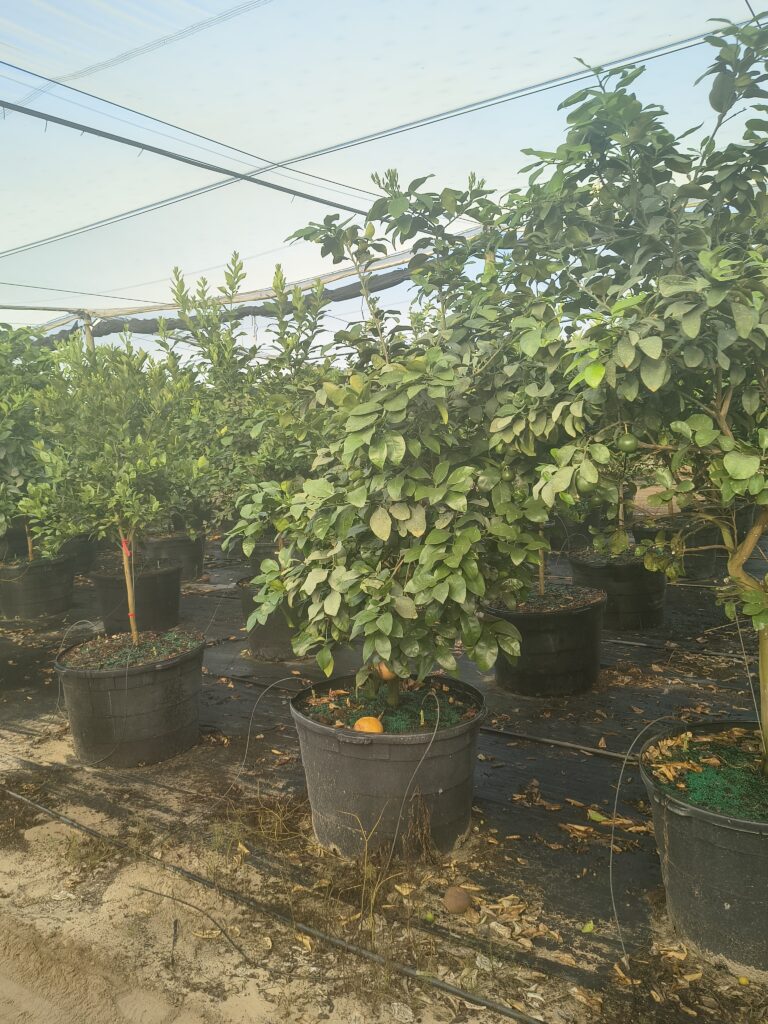
Grapefruit trees are among the larger citrus types, and a standard tree on typical rootstock will reach roughly fifteen to twenty feet in height with a comparable spread once it matures. That size works in your favor if you want the tree to do more than produce fruit, since the canopy is dense enough to shade a patio, cool a west facing wall, or screen a view. The leaves are large, thick, and dark green, and the tree holds them all year, so it functions as a permanent piece of the landscape rather than a seasonal one. In late winter the tree covers itself in white blossoms that carry a strong citrus fragrance across the yard for a few weeks. Bees work the blooms heavily, which benefits everything else growing nearby. A well placed grapefruit tree earns its footprint several times over.
Size also means the planting location deserves real thought before the tree goes in the ground. Plan on at least twelve to fifteen feet of clearance from the house, driveway, septic drain field, and any overhead utility lines, and give the tree fifteen to twenty feet from other large trees so the roots and canopy are not competing. Grapefruit needs full sun to produce well, which means eight or more hours of direct light each day; a tree planted in partial shade will grow but will set noticeably less fruit and stay leggy. Drainage matters as much as sunlight in Florida, since citrus roots will not tolerate standing water and are prone to root rot in low spots that hold rain. A gentle rise or a naturally sandy area is ideal, and low areas that puddle after a summer storm should be avoided entirely. Getting the site right at planting is far easier than moving an established tree later.
Homeowners who want the fruit without the full canopy have options, and this is worth discussing before you buy. Trees grafted onto dwarfing rootstock stay closer to eight to twelve feet and are much easier to harvest, spray, and cover during a freeze. Regular light pruning also keeps a standard tree within a manageable range, though grapefruit responds to heavy cutting with vigorous upright regrowth that produces little fruit. The better approach is to remove crossing branches, low limbs, and any dead wood, and to do that work in late winter or early spring after the freeze risk passes rather than in fall. Heavy pruning late in the year pushes tender new growth right when cold weather is approaching, which is exactly the wrong outcome. A tree kept at a reachable height is a tree whose fruit actually gets picked.
Grapefruit Tree Varieties Worth Adding to a Home Citrus Garden
Variety selection has more effect on your satisfaction than almost any other decision, and the choices break down along two lines: flesh color and seed count. Marsh is the classic white seedless grapefruit, ripening from roughly December into May, with a clean tart flavor and very few seeds. Duncan is the older seedy white variety, and while the seeds put some people off, it is widely regarded as having the best flavor of any grapefruit and it tends to handle cold slightly better than most. Ruby Red brought pink flesh into the mainstream and remains a dependable, moderately sweet choice for home growers. Flame and Ray Ruby carry deeper red flesh and hold that color well through the season. Star Ruby produces the darkest flesh of the common types but is more particular about growing conditions and less forgiving of stress.
Ripening windows differ enough between varieties that a homeowner with room for two trees can stretch the harvest considerably. Earlier types come into usable quality around November and December, while later types improve steadily and peak between February and April. Fruit does not ripen further after picking, so the tree is the storage unit and the calendar decides the flavor. A tree planted this year will typically begin producing a small crop within three to four years, with meaningful volume arriving around year five. That timeline assumes a grafted nursery tree; a grapefruit grown from a seed will take far longer, and it will not reliably produce fruit matching the parent. Grafted stock is the only sensible route for a home citrus garden.
Rootstock is the part of the tree nobody sees and the part that quietly determines how the tree performs. The rootstock controls mature size, influences cold tolerance, affects how the tree handles soil pH and drainage, and plays a role in disease resistance. Two grapefruit trees of the same variety on different rootstocks can behave quite differently in the same yard, which is why buying from a nursery that knows its stock is worth more than saving a few dollars at a big box store. We are happy to explain what your tree is grafted onto and why that choice suits Central Florida soil. Ready to look at what is available right now? Click here to see our grapefruit trees for sale and the varieties we currently carry.
How to Plant and Care for Grapefruit Trees in a Central Florida Citrus Garden
Grapefruit care in Central Florida is straightforward once you understand what the sandy soil here does and does not provide. Our soils drain quickly, hold very little nutrition, and often run higher in pH than citrus prefers, which means feeding and watering matter more here than in heavier soils. The upside is that drainage problems are rare outside of low spots, and citrus roots appreciate that. Most of the work happens in the first two years while the tree establishes; after that a healthy grapefruit tree is fairly self sufficient with a regular fertilizer schedule and occasional attention. Pest pressure exists and should be taken seriously, particularly the Asian citrus psyllid, but home trees can be managed with basic sprays and good nutrition. The sections below cover site preparation, feeding, and protection in the order you will need them.
Choosing a Planting Site for Grapefruit Trees in Your Citrus Garden
Start by walking the property after a heavy summer rain and noting where water stands, because those areas are permanently off the list for citrus. Grapefruit roots need oxygen, and soil that stays saturated for even a day or two at a time invites Phytophthora root rot, which is one of the most common causes of decline in backyard citrus. The ideal spot is high, open, and sunny, with sandy or sandy loam soil and no competition from established shade trees. South and southeast exposures are preferable in Central Florida because they collect winter sun and offer some protection from the north winds that accompany cold fronts. Planting on the south side of a house or a solid fence gives young trees a meaningful advantage during a freeze event. Take the extra hour to pick the site correctly, since this decision follows the tree for decades.
Digging technique for citrus is simpler than most people expect and easy to get wrong in the direction of doing too much. Dig the hole roughly twice as wide as the root ball but no deeper than the root ball itself, so the tree sits on undisturbed soil and cannot settle below grade. Backfill with the native soil you removed rather than potting mix, compost, or amendments, because a rich pocket of soil encourages roots to circle inside the hole instead of spreading into the surrounding ground. Set the tree so the top of the root ball sits an inch or two above the existing grade, and confirm that the graft union, the visible swelling low on the trunk, stays several inches above the soil line permanently. Burying that union allows the upper variety to root on its own and defeats the entire purpose of the rootstock. Water thoroughly as you backfill to settle the soil and eliminate air pockets around the roots.
Finish the planting with attention to mulch and trunk protection, both of which are handled differently for citrus than for other landscape trees. Apply mulch in a ring out toward the drip line but keep a bare zone of at least twelve inches around the trunk, since mulch piled against citrus bark holds moisture and encourages foot rot. Keep grass and weeds cleared from that same area for the first several years, because turf competes aggressively for water and nutrients and string trimmer damage to young citrus bark is a frequent and entirely preventable problem. Young trunks are also vulnerable to sunburn in our climate, and painting the trunk with white latex paint diluted with an equal amount of water reflects heat and prevents cracking. Stake the tree only if the site is windy, and remove the stake after the first year so the trunk develops proper strength. A tree planted correctly in August has the warm season ahead of it to root out before the first cold night.
Watering and Fertilizing Grapefruit Trees in a Central Florida Citrus Garden
Newly planted grapefruit needs consistent water, and the first few weeks set the tone for how quickly the tree establishes. Plan on two to three gallons every other day for the first two to three weeks, then shift to two or three times per week for the remainder of the first growing season. Sandy soil drains fast enough that deep infrequent watering does not work as well here as it does elsewhere, so moderate volume on a regular schedule is the better approach. After the first year you can taper toward weekly watering, and by year three an established tree usually needs supplemental irrigation only during the dry months of spring. Summer rainfall in Central Florida generally covers a mature tree’s needs from June through September, though a week without rain during fruit development still warrants a soaking. Watch the leaves for cupping or dulling, which usually signals drought stress well before wilting appears.
Fertilizer is not optional for citrus in Florida sand, and using the right product matters as much as the schedule. Choose a fertilizer formulated for citrus that includes micronutrients, specifically magnesium, manganese, zinc, iron, and boron, since our soils are deficient in several of these and a standard lawn fertilizer will not correct the problem. Young trees do best with light applications every six to eight weeks through the active growing season, which runs roughly from February into early fall. Mature bearing trees typically need three applications per year, spread around late winter before bloom, early summer, and early fall. Avoid feeding after October, because a late nitrogen push produces soft new growth that freezes easily during a December or January cold snap. Spread the fertilizer evenly out to the drip line rather than piling it near the trunk, and water it in afterward.
Reading the leaves tells you most of what you need to know about nutrition, and grapefruit is a communicative tree in this respect. Yellowing between the veins while the veins themselves stay green usually points to a magnesium, manganese, or zinc shortfall, all of which are correctable with a micronutrient application or a foliar spray. Uniform pale yellow across older leaves generally indicates nitrogen deficiency, while yellowing concentrated on the newest growth often traces back to iron availability tied to high soil pH. A simple soil test through your county extension office removes the guesswork and costs very little. Overfertilizing causes its own problems, including leaf burn and excessive vegetative growth at the expense of fruit, so follow label rates rather than doubling up. Steady, correct feeding produces a tree that resists pests and disease far better than a stressed one.
Protecting Grapefruit Trees From Pests and Cold in a Citrus Garden
The Asian citrus psyllid is the pest that deserves the most attention from Florida homeowners, because it spreads citrus greening disease, also called HLB. The insect is small and yellowish and feeds on tender new growth, which is where inspection and treatment should focus. Regular applications of horticultural oil during each new growth flush suppress psyllid populations effectively and also help with citrus leafminer, aphids, scale, and mites, making it the single most useful product in a backyard citrus program. Greening has no cure once a tree is infected, so prevention through psyllid control and strong nutrition is the practical strategy for home growers. Trees kept well fed and well watered tolerate infection far longer than neglected ones, which is a large part of why the fertilizer schedule matters. Starting with certified, disease free nursery stock is the other half of the equation.
Other pests are present but generally less serious for a backyard tree. Citrus leafminer produces silvery winding trails in new leaves and looks alarming, though mature trees outgrow the damage without treatment and only young trees warrant intervention. Citrus rust mites cause the brown russeting on fruit skin mentioned earlier and affect appearance rather than eating quality. Scale and whitefly show up as sticky residue and sooty black mold on leaves, both of which respond to horticultural oil. Citrus canker also exists in Florida and creates raised corky lesions on leaves and fruit; copper based sprays reduce spread, and infected fruit remains safe to eat. Remove fallen leaves and fruit from beneath the tree, since debris harbors both pests and disease.
Cold protection is the seasonal task that separates a productive grapefruit tree from a setback every few years. Mature grapefruit trees handle brief dips into the upper twenties without permanent damage, though fruit on the tree can be injured after several hours at or below twenty eight degrees. Young trees in their first two or three winters are considerably more vulnerable and should be protected any time a freeze is forecast. Water the soil thoroughly the day before a cold night, since moist ground holds and releases heat better than dry sand. Mound soil or mulch around the base of a young trunk to protect the graft union, and cover the tree with a blanket or frost cloth that reaches the ground to trap radiant heat, removing it once temperatures rise the next day. Plastic sheeting alone is a poor choice because it conducts cold wherever it touches foliage.
Why You Need a Trusted Nursery for Grapefruit Trees in Your Home Citrus Garden
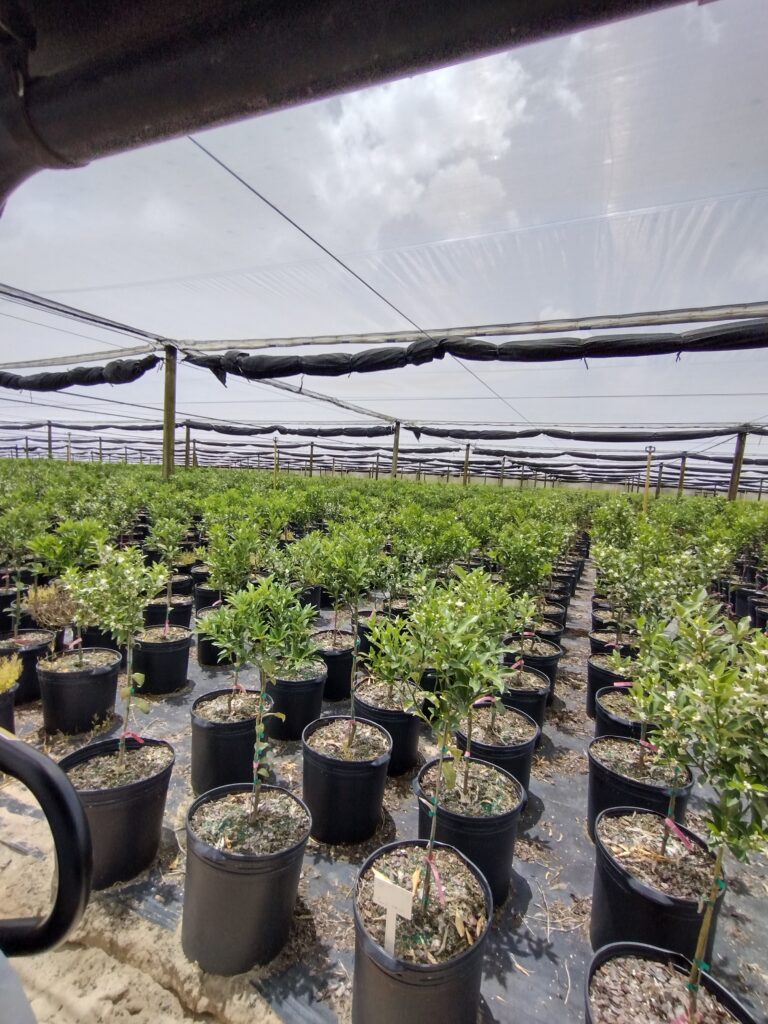
Where you buy a grapefruit tree affects how that tree performs for the next twenty years. Florida law requires citrus nursery stock to be produced inside enclosed, certified structures specifically to keep psyllids away from young trees, and reputable nurseries follow that standard closely. A tree that has been sitting on a hot parking lot rack for six weeks with inconsistent watering starts life at a disadvantage no amount of good care fully corrects. Variety and rootstock selection also require someone who can explain the tradeoffs rather than pointing at a tag. Paul’s Nursery has been a family operation for more than a century and a quarter, and that longevity comes from giving people accurate answers rather than quick sales. The right tree, planted correctly, is the whole game.
Getting Grapefruit Trees Delivered and Planted for Your Home Citrus Garden
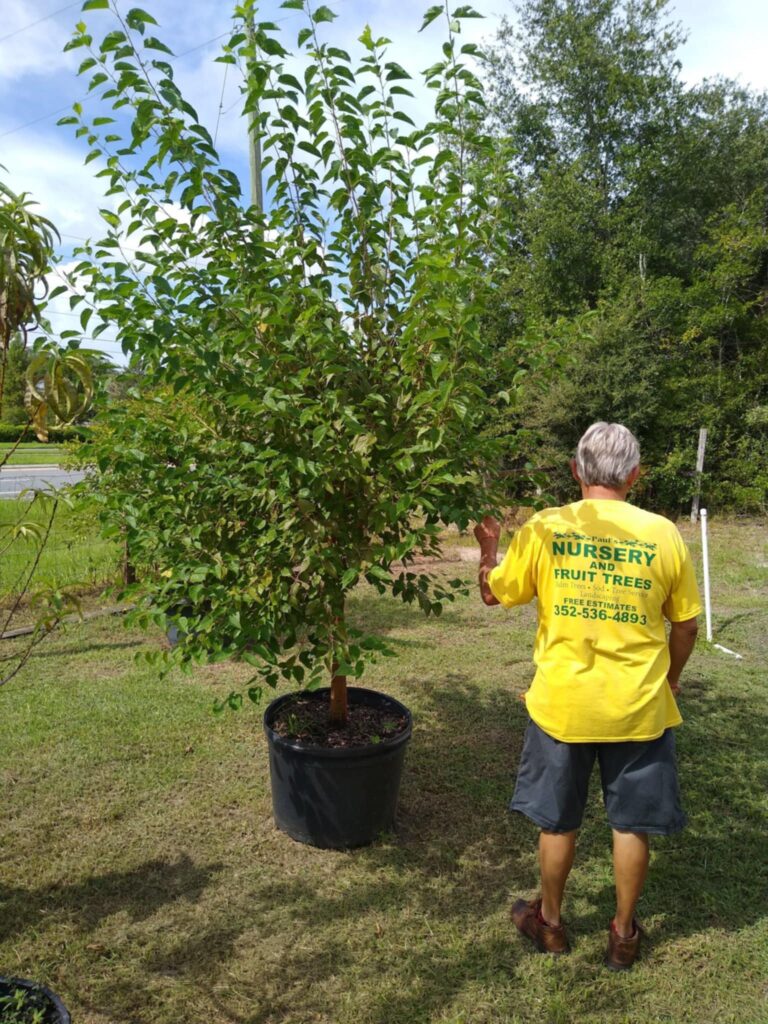
A container grown grapefruit tree of usable size is heavier and more awkward than most people anticipate, and the root ball alone can make a two person job out of what looked like a simple errand. Damage during transport is common, and a cracked root ball or a snapped leader sets a tree back a full season. We offer free estimates for delivery and planting, which removes the logistics problem entirely and gets the tree in the ground the same day it leaves our property. That matters more in August than in February, since a tree sitting in a hot vehicle or waiting on a driveway loses moisture quickly. Having the planting done correctly also protects the graft union depth and the drainage considerations that determine long term health.
Professional planting also builds in a site evaluation that most homeowners would not think to request. We look at drainage, sun exposure, spacing from structures and utilities, and proximity to other trees before anything goes in the ground. Those factors are far easier to address before planting than after, and a tree placed twelve feet from a house will need very different management than one placed twenty five feet out. We can also flag issues like a septic drain field or a compacted fill area that would cause trouble years later. This is the kind of thing that comes from working in Central Florida soil for generations rather than reading a care tag.
Once the tree is in the ground, you should know exactly what to do next, and we make sure of that before we leave. That includes the watering schedule for the first several weeks, the fertilizer product and timing, and what to watch for as the tree pushes its first flush of new growth. Questions come up later, and we would rather answer them than have a customer guess. Serving a grapefruit tree well in its first year sets up decades of production. Planning a full citrus garden instead of a single tree? Click here for our complete selection of fruit trees for sale and we can help you lay out the whole planting.
Choosing Grapefruit Trees That Match Your Home Citrus Garden Goals
The right grapefruit tree depends on what you actually want from it, and that conversation should happen before you pick a variety. Someone who eats a half grapefruit at breakfast every morning has different needs than someone who wants to juice fifty pounds at a time or who mainly wants shade with fruit as a bonus. Seed tolerance, flesh color preference, ripening window, and mature tree size all factor into the recommendation. A household with a small lot and a two story house on the sunny side needs a different answer than one with an open acre.
Combining grapefruit with other citrus extends the harvest across a much longer stretch of the year, and this is where a little planning pays off. Early tangerines can start producing in the fall, oranges fill the midwinter window, and later grapefruit varieties carry into spring. Three well chosen trees can supply a household with fresh citrus for six months or more without any single tree being overwhelmed. Spacing and sun exposure need to be worked out together for a multiple tree planting rather than one tree at a time.
We also tell people when grapefruit is not the right fit, which happens more often than you might expect. Households with medication concerns, very small yards, or a strong preference for sweeter fruit are frequently better served by a tangelo, a tangerine, or a sweet orange. Nobody benefits from a tree that ends up ignored in the corner of the yard. Want to compare grapefruit against other citrus before you decide? Click here to explore our orange trees and see how the two fit together in a citrus garden.
Why Choose Paul’s Nursery for Grapefruit Trees in Your Home Citrus Garden
Paul’s Nursery is a family owned operation with more than one hundred twenty five years of nursery tradition behind it, and everything we grow is selected for how it performs in Central Florida rather than how it looks on a shelf. We know which grapefruit varieties handle Lake County winters, which rootstocks suit our sandy soil and pH, and which combinations produce reliably in a residential yard. That knowledge comes from generations of watching trees succeed and fail in this exact climate. Our recommendations are honest, including the times when the honest answer is a different tree than the one you came in asking about.
We serve homeowners throughout Groveland, Clermont, Winter Garden, The Villages, Minneola, Mascotte, Leesburg, Eustis, Mount Dora, Tavares, Apopka, Ocoee, and the surrounding communities. Free estimates for delivery and planting mean you can get a healthy grapefruit tree into the ground correctly without wrestling a heavy container into a vehicle. Our goal has always been to help people build genuine backyard orchards rather than sell single trees and move on. Customers come back to us years later for their second and third trees, which is the measure that matters most to a family business.
Late summer is a good time to get a grapefruit tree established, with warm soil, regular rainfall, and several months of growing season ahead before the first cold night. Come see what we have in stock, or call and we will talk through varieties, spacing, and care before you commit to anything. Ready to add grapefruit to your citrus garden? Click here to view our grapefruit trees for sale, stop by 13844 Equestrian Dr in Groveland, or reach us at (352) 536-4893 and we will help you pick the right tree for your property.